


When a tenant has a kitchen fire without renters insurance, the fallout lands on your desk: displaced residents, property damage disputes, and liability claims against the owner.
Requiring renters insurance can help protect your owners, residents, and business. But choosing which providers to recommend takes more than a quick search. The best options for individual shoppers don’t always meet property management needs.
This guide compares ten renters insurance options through a property manager’s lens, with a focus on proof of insurance, tenant enrollment, coverage options, state availability, and lease requirement fit.
What We’ll Cover:
- Why renters insurance matters for property managers, owners, and residents
- What to look for when comparing renters insurance providers
- Ten renters insurance options to consider for managed properties
- How to add a renters insurance requirement to your lease
- How property management software can help track policy compliance
Why Property Managers Should Require Renters Insurance
For owners, renters insurance acts as a first line of financial defense. When a tenant causes water damage, a grease fire, or an accident that injures a guest, the tenant’s liability coverage responds before the owner’s policy does. That keeps claims off the owner’s record, helps hold down premium increases, and reduces out-of-pocket costs for everyone involved.
For property managers, the benefits go beyond liability. Renters insurance includes additional living expenses coverage, which means a displaced tenant has resources for temporary housing instead of relying on you to coordinate alternatives. Personal property coverage reduces disputes after a loss because tenants can file their own claims rather than looking to the owner or management company for reimbursement.
What to Look for in Renters Insurance as a Property Manager
When you evaluate renters insurance options, your criteria should differ from what a consumer considers. You’re not shopping for your own policy. You’re identifying providers that make compliance easy, protect your owners, and reduce friction for tenants at move-in.
Here are the factors that matter most:
- Proof-of-insurance certificates and interested party endorsements. You need documentation that names the owner or management option as an interested party. This means you’ll receive notification if a policy is canceled or lapses. Not every provider offers this, so ask before recommending one.
- Automatic renewal and lapse alerts. Providers that notify you when a tenant’s policy is about to expire or has been canceled save you from manually chasing down paperwork.
- Coverage minimums. Common requirements are $100,000 in liability coverage and $30,000 in personal property coverage. Make sure any provider you recommend can meet your lease requirements.
- Ease of tenant enrollment. The faster and simpler sign-up is, the fewer delays you’ll face at move-in. Providers with online-only enrollment and instant proof of insurance reduce back-and-forth.
- Claims responsiveness and carrier reputation. Look at NAIC complaint ratios. A lower complaint ratio can be a useful signal, though residents should still compare coverage, claims processes, and local availability.
- Cost to tenants. Lower-cost coverage can reduce pushback during leasing, as long as the policy meets your lease requirements.
- State availability. Some carriers operate in all 50 states; others are regional. If you manage properties across multiple states, availability matters.
- Bundling options. Tenants who bundle renters and auto insurance often pay less, which makes compliance easier for you.
1. Buildium
Insurance Integrated with Property Management Software
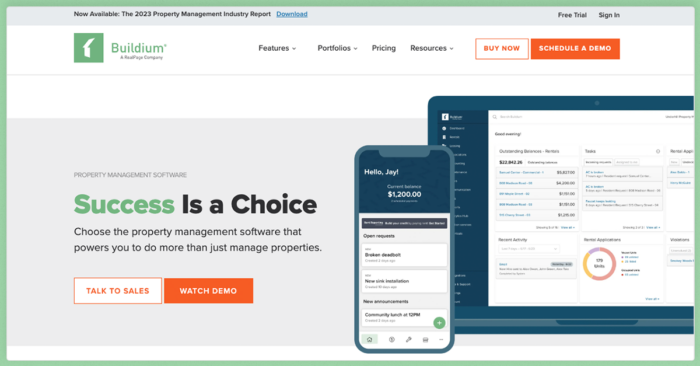
Buildium® is a property management platform that offers two insurance products built for the way property managers actually work. Unlike standalone insurance carriers, Buildium’s renters insurance and property insurance options are integrated directly into the same platform you use for leasing, accounting, and maintenance. That means coverage tracking, tenant enrollment, and claims happen inside a system you already manage every day.
Buildium offers two complementary options.
Buildium Renters Insurance (powered by MSI) is a standard HO-4 policy where the tenant is the named insured. Tenants sign up through the Resident Center in minutes, and their coverage status syncs with your dashboard.
Buildium Property Insurance is a liability-focused policy where you, the property manager, are the named insured. It covers up to $300,000 in resident-caused property damages with no deductible, and it can be set as a default for any tenant who doesn’t carry their own renters insurance.
Key Features
- Coverage tracking built into Buildium: see which tenants are covered, which policies are expiring, and which have lapsed
- Automatic placement on a Buildium Property Insurance policy if a tenant’s coverage lapses and insurance is required
- Tenants sign up through the Resident Center without leaving the Buildium ecosystem
- Up to $300,000 in liability coverage with no deductible (Property Insurance)
- Pet damage coverage ($1,000 per occurrence) and bed bug remediation ($1,000 per occurrence) available as endorsements
- Loss of rental income coverage up to $10,000 per unit, per occurrence
- Option to generate ancillary revenue through administrative fees on Property Insurance policies
- Centralized claims filing through Buildium to MSI, reducing the need to coordinate with multiple carriers and adjusters
2. State Farm
Trusted Overall Renters Insurance for Managed Properties
State Farm® is the largest home insurer in the United States and one of the most recognized names in renters insurance. The company operates in 47 states through a network of local agents. State Farm carries a low NAIC complaint ratio, which reflects fewer policyholder disputes relative to its market share.
For property managers, State Farm’s combination of broad availability, established claims infrastructure, and agent support makes it a common recommendation for tenants. The agent model means tenants can get local assistance, and you can work with a dedicated agent to coordinate proof-of-insurance documentation across multiple units.
Key Features
- Proof-of-insurance certificates available for property managers and owners
- Interested party endorsements so you receive cancellation or lapse notifications
- Online policy management and mobile app for tenants
- Replacement cost coverage (pays to replace items at current prices, not depreciated value)
- Multiple discount options, including bundling with auto insurance
- Identity theft restoration coverage included
Note: State Farm availability can vary by state and underwriting status. In California, new renters policies may be limited, though some existing policyholders may be able to maintain coverage when moving within the state. Tenants should confirm availability directly before applying.
3. Lemonade
Insurance with Fast Tenant Enrollment
Lemonade® is a technology-focused insurance company that offers renters insurance in 28 states and Washington, D.C. The company is known for a quick sign-up process, often completed in under two minutes, and an AI-driven claims system. Lemonade is popular with younger renters who prefer managing everything through a mobile app.
From a property management standpoint, the speed of enrollment is the biggest advantage. Tenants can purchase a policy and generate proof of insurance almost immediately, which reduces delays during the move-in process.
Key Features
- Instant proof-of-insurance generation after purchase
- Additional interest endorsement available for owners and management companies
- Entirely app-based experience for tenants
- AI-powered claims processing
- Pet damage add-on available (covers damage caused by pets to the rental unit)
- Giveback program donates unclaimed premiums to tenant-selected charities
Note: Lemonade’s state availability is more limited than legacy carriers. Confirm the company operates in your state before recommending it to tenants.
4. Allstate
Insurance with Widespread Nationwide Availability
Allstate® offers renters insurance in all 50 states and Washington, D.C., making it one of the most accessible options for property managers with portfolios across multiple markets. Allstate is a well-known brand with both agent and online service options.
For property managers, Allstate’s nationwide footprint means you can recommend a single carrier regardless of where your properties are located. The company offers interested party endorsements, which is a requirement for most property management operations.
Key Features
- Available in all 50 states and D.C.
- Interested party endorsements with cancellation notifications
- Identity theft restoration coverage
- Scheduled personal property coverage for high-value items
- Online claims filing and policy management
- Protective device and multi-policy discounts
5. Nationwide
Insurance with Affordable Coverage
Nationwide® operates in 42 states and Washington, D.C. and consistently ranks among the most affordable major renters insurance carriers in industry comparisons. For property managers whose tenants push back on insurance costs, Nationwide’s lower premiums can reduce friction during the lease-signing process.
Nationwide offers standard renters insurance features with several add-on options. The lower price point makes it a practical recommendation for properties where tenants are cost-sensitive.
Key Features
- Replacement cost coverage option (available as an upgrade)
- Building additions coverage for tenant-installed improvements
- Credit card coverage for unauthorized charges
- Earthquake and water backup add-ons available
- Online quotes and policy management
Note: Nationwide renters insurance is not available in Alaska, Florida, Hawaii, Louisiana, Massachusetts, New Jersey, New Mexico, or Oklahoma.
6. Travelers
Insurance That Is Well-Suited for Properties with Tenant Improvements
Travelers® has been in operation since 1864 and holds the highest AM Best financial strength rating. The company offers renters insurance in 47 states and maintains a low NAIC complaint ratio.
What sets Travelers apart for property managers is the inclusion of home improvement coverage in its standard renters policy. If your tenants install fixtures, built-in shelving, or other upgrades, this coverage protects those improvements without an additional rider. That’s a useful feature for properties where owners allow tenant modifications.
Key Features
- Home improvement coverage included in the standard policy
- Interested party endorsements available
- Online claims filing
- Smart-home device discounts (tenants with monitored security systems may qualify)
- Strong financial strength rating (A++ from AM Best)
Note: Travelers renters insurance is not available in Hawaii, Massachusetts, or New Hampshire.
7. Progressive
Insurance with 24/7 Customer Service
Progressive® offers renters insurance in all 50 states and Washington, D.C. through a network of third-party underwriters. The company offers 24/7/365 customer service, which can be valuable when tenants need to file claims or generate proof of insurance outside of business hours.
For property managers, Progressive’s constant availability means fewer situations where a tenant can’t get documentation when you need it. The company also offers online quoting and purchasing, which simplifies the enrollment process.
Key Features
- 24/7/365 customer support via phone and online
- Available in all 50 states and D.C.
- Online quotes and policy purchasing
- Water backup coverage add-on
- Gated community discount available
- Pay-in-full and paperless billing discounts
Note: Because Progressive uses third-party underwriters for renters insurance, the claims experience may vary depending on which underwriter handles the policy.
8. USAA
Insurance for Military-Connected Tenants
USAA® offers renters insurance in all 50 states, but eligibility is restricted to active-duty military, veterans, and their families. If you manage properties near military installations or in areas with a high concentration of military personnel, USAA is a strong option to include on your preferred provider list.
USAA’s renters insurance includes several coverages that are rare among standard carriers, such as flood and earthquake protection at no additional cost.
Key Features
- Flood and earthquake coverage included in the standard policy (most carriers charge extra or exclude these)
- No deductible for military uniforms and equipment
- Coverage for damage caused by acts of war
- Up to 28% base discount for active-duty and veteran policyholders
- Strong customer satisfaction ratings
Note: USAA is only available to eligible military members and their families. It cannot be recommended as a default option for all tenants.
9. Amica
Insurance with High Customer Satisfaction
Amica® offers renters insurance in 48 states and carries one of the lowest NAIC complaint ratios in the industry. The company has received recognition from J.D. Power for customer satisfaction. For property managers, recommending a carrier with a strong service reputation can reduce the number of tenant complaints that end up on your desk.
Amica is a mutual company, which means policyholders may be eligible for dividend payments on certain policy types.
Key Features
- Among the lowest NAIC complaint ratios of any major carrier
- Replacement cost coverage available
- Dividend policies that may return a portion of premiums to policyholders
- Multi-channel support (phone, online, mobile)
- Valuables coverage for jewelry, art, and other high-value items
Note: Amica is not available in Alaska or Hawaii.
10. Assurant
Insurance for Multifamily Property Management
Assurant® is different from the other carriers on this list because it is designed specifically for the multifamily and property management industry. Rather than marketing directly to individual consumers, Assurant partners with property management companies and offers tools built for portfolio-level compliance tracking. The company covers more than three million apartment units nationwide and holds an A+ rating from AM Best.
For property managers, Assurant is the closest thing to an industry-specific renters insurance carrier. Its Cover360 program is designed for property management operations that need to track compliance across hundreds or thousands of units.
Key Features
- Built-in property management integration and compliance tracking
- Automatic proof-of-insurance verification
- Coverage options tailored for apartment communities
- Cover360 program for portfolio-wide compliance management
- A+ AM Best financial strength rating
How to Add a Renters Insurance Requirement to Your Lease
If you don’t already require renters insurance, adding the requirement is straightforward. Here’s how to approach it:
- Start with a clear lease clause. Your lease should specify minimum coverage amounts (a common standard is $100,000 in liability and $30,000 in personal property), name the owner or management company as an interested party, and state the deadline for submitting proof of insurance. Work with your legal counsel to draft language that complies with your state and local regulations.
- Require proof before move-in. Make proof of insurance a condition of key handover, not something tenants can submit later. This is the simplest way to avoid gaps at the start of a tenancy.
- Name the owner or management company as an interested party. This is different from being a named insured. An interested party designation means you receive notifications if the policy is canceled, lapses, or changes. Without this, you’ll have no way of knowing when a tenant loses coverage.
- Set a timeline for renewals. Require tenants to submit updated proof of insurance at each lease renewal. Don’t assume that a policy in place at move-in is still active a year later.
- Consider a preferred provider list. Giving tenants a short list of recommended carriers (such as the ones reviewed in this article) simplifies their decision and speeds up the process. Avoid requiring a specific carrier unless your legal counsel confirms it is allowed in your market. You can still provide options that meet your coverage requirements.
- Monitor compliance throughout the lease. A one-time check at move-in isn’t enough. Policies can expire, lapse, or change during the lease term, so tracking insurance status across your portfolio takes ongoing work. Property management software can help by flagging expired or canceled policies and notifying tenants to take action.
Requirements vary by location, so check with a legal professional in your area before implementing or changing your renters insurance policy.
The Right Renters Insurance Policy Protects Your Entire Portfolio
Requiring renters insurance is an ongoing part of your operations where you continually make sure every tenant in your portfolio stays insured throughout their lease. That’s where property management software comes in.
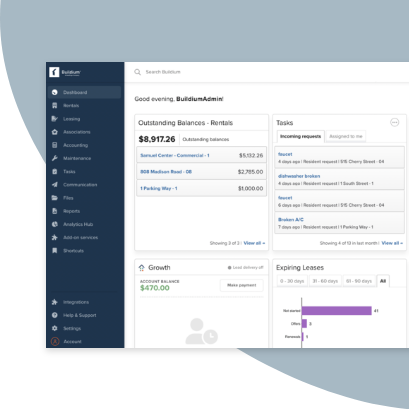
Buildium’s renters insurance tools are integrated with its broader platform, which makes it easier to track missing, expiring, or expired policies, send reminders to residents, and review uploaded insurance documents from the same platform where they manage leases, maintenance, and accounting.
Key Takeaways
- Renters insurance helps protect owners, residents, and property management businesses from avoidable financial exposure.
- The best renters insurance option for a resident is not always the best fit for a managed portfolio.
- Property managers should look for proof-of-insurance documentation, interested party notifications, reliable enrollment, and broad availability.
- Lease requirements should clearly state coverage minimums, proof deadlines, renewal expectations, and interested party language.
- Tracking coverage throughout the lease matters just as much as collecting proof before move-in.
If you’re looking for a way to simplify renters insurance compliance across your portfolio, you can try Buildium with a 14-day free trial or schedule a guided demo to see how it works with your specific setup.
Frequently Asked Questions About Renters Insurance
What Company Is the Best for Renters Insurance?
There is no single best renters insurance company for every situation. State Farm, Lemonade, and Nationwide are consistently rated among the top carriers based on pricing, coverage, and customer satisfaction. The right choice depends on state availability, tenant needs, and how well the carrier supports property manager requirements such as interested party endorsements and proof-of-insurance documentation.
How Much Does Renters Insurance Cost per Month?
Renters insurance typically costs between $13 and $39 per month, depending on coverage levels, location, deductible, and the carrier. Some providers, such as Lemonade, start at $5 per month with basic coverage. National averages vary by study, but most tenants pay between $15 and $25 per month for a standard policy.
Can a Property Manager Require Renters Insurance?
Yes. Most states allow property managers and owners to require renters insurance as a condition of the lease. The requirement must be clearly stated in the lease agreement and applied consistently to all tenants. Requirements and enforcement options vary by location, so check with a legal professional in your area.
What Minimum Coverage Should Property Managers Require?
Common minimums are $100,000 in liability coverage and $30,000 in personal property coverage. Some property managers set higher thresholds depending on the property type and risk profile. Your lease clause should clearly state the minimum amounts, and you should verify that each tenant’s policy meets those thresholds before move-in.
Does Renters Insurance Cover Pet Damage?
Standard renters insurance typically covers liability if a tenant’s pet injures a guest, but it does not cover damage the pet causes to the rental unit itself. Some providers, such as Lemonade, offer pet damage add-ons that extend coverage to include damage to the property. If pet damage is a concern for your portfolio, look for carriers that offer this option and consider requiring it in your pet policy addendum.