How you handle your property maintenance can make or break your business. Having the right workflows in place can keep your maintenance running smoothly, and even help you generate more revenue.
We've talked to property management operations specialists and our own software team to lay out an easy maintenance workflow that you can set up using Buildium.
Maintenance work usually starts with a request from residents, owners, or from property managers, who enter a request during a seasonal proactive maintenance check.
Set up a systematic, repeatable process for submitting maintenance requests. This should include a form that:
Staff members should also be able to submit tasks of all types, from maintenance tasks that tenants request by phone or walk-in to callback requests from tenants for specific staff members.
Tech tip:
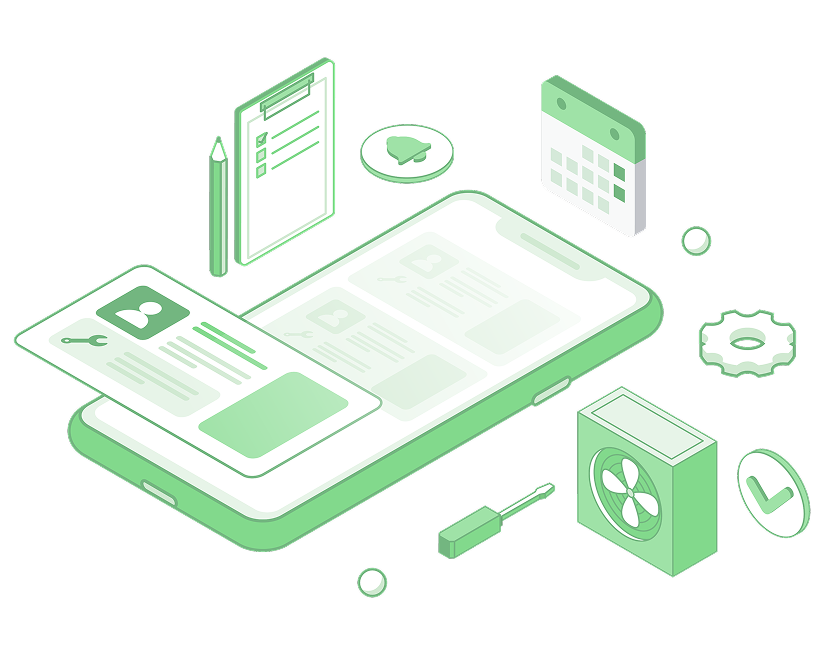
The most efficient way to do this is through a software platform built for property managers that includes a maintenance request tool in its resident portal. It should include a way for owners and even staff to submit requests, as well. All tasks will show up on your dashboard, too, so you can schedule across your team efficiently. This should include a resident portal and mobile app that allows residents to explain what they need easily.
It should give you the option to:
Pro tip:
For urgent repairs, give residents a single phone number to call, and staff it 24/7/365. That's where a Maintenance Contact Center comes in. An external maintenance number that answers calls anytime can reduce strain on your staff and your budget, while letting your team handle emergencies as quickly as possible.
Enjoying the preview? Unlock the full guide to gain even more helpful insights.
When a tenant or owner makes a request, a staff member receives a notification in their maintenance software to review the task and assign it to the appropriate in-house staff or external vendor.
Give your staff the tools and guidance they need to prioritize maintenance tickets appropriately and route them to the right vendors or in-house personnel. To put together your guidelines, answer these questions:
Example Point System
Example
Give each task a point value based on time and effort. A water-heater replacement might be eight points, while swapping a lightbulb is one point. Cap each team member at a daily total, such as 20 points, so no one gets overloaded.
Use a simple priority framework so everyone on your team sorts requests the same way. The table below shows one way to structure it:
| Priority Level | What It Means | Examples | Target Response Time |
|---|---|---|---|
| Emergency | A health, safety, or habitability risk that needs action right away | No heat, flooding, a gas smell, no running water | Immediately, same day |
| Urgent | A problem that could get worse or cause damage if it waits | A leaking faucet, a broken appliance, a failing lock | Within one to two days |
| Routine | Cosmetic or non-damaging work that can be scheduled | Peeling linoleum, touch-up paint, routine landscaping | On a planned cycle, within the week |
Important:
Some repairs that affect health and safety, such as heat, water, or structural issues, may carry response-time obligations that vary by location. Keep in mind that it is a good idea to check your local requirements, or consult a qualified professional if you are unsure.
Tech tip:
In your property maintenance software, tag tickets with the appropriate priority so your maintenance teams know what to work on first.
Buildium delivers purpose-built software to handle the maintenance demands property managers face, and more, all in one place. Give renters, owners, and your team access to the features they want, including:
Buildium's platform can help you take control of your maintenance operations. If you'd like to see how it works, you can start a 14-day free trial or schedule a guided demo.
To assign a maintenance task, your property management software should let you do the following:
Each member of your staff and each of your vendors should have access to your maintenance software. When you assign the task, the assigned staff or vendor gets a notification.
Pro tip:
Track vendor performance over time using the data already in your software: cost, speed to complete, and resident satisfaction. Over time, this record helps you send the right jobs to your most reliable vendors and cut down on no-shows.
Your owners and tenants need to be notified, as well. Your maintenance workflow should include a notification step, where they receive an update on the timeline of their request along with the person assigned to it.
After staff and vendors are assigned tasks, they can update the status through the portal, which triggers a notification for you. When you log into your dashboard, you can see the status of every task at once.
Tech tip:
A 360-degree view of all the work happening in real time and the work scheduled for the near future helps you plan regular maintenance and assign more urgent issues evenly across your team, or to the right vendor.
When maintenance workers update tasks, you can send notifications to tenants or owners.
When a task or project is completed, it's important to close it out. When you do, your dashboard clears those tasks from staff or vendors, so you can assign them other work. It also gives you an accurate picture of how long the work took to complete.
Pro tip:
After completing a task or project, send a notification to owners and tenants to let them know the work is done. Follow up to confirm that repairs or new installations are satisfactory.
Tech tip:
Use property management software to collect invoices from vendors and confirm they're paid. Send your own invoices (if necessary) to owners through your software, as well.
The final step of your maintenance workflow is analysis. Use the information collected through requests, tickets, scheduling, and tracking to improve your process and cut down on time and money. Property management maintenance analytics can do that in three ways:
Property management software that includes an analytics dashboard can help property managers track all of these numbers and use them to gain efficiency and lower costs.
To get the most from your data, it helps to know the difference between two approaches:
Planned, time- or usage-based upkeep — seasonal HVAC checks, regular filter changes. Scheduled ahead of time to keep systems running and catch small issues before they turn into breakdowns.
Uses data and patterns from past requests to anticipate which systems are likely to fail next. Instead of a fixed calendar, you act on signals in your maintenance history and address problems just before they happen.
Track a handful of numbers so you can see how your process is working and where to improve:
How long it takes to act on a new request
Faster responses keep residents satisfied and stop small issues from growing
The share of tasks finished in a given period
Shows whether your team is keeping up with the work coming in
How often closed tasks come back
A high rate points to repairs that are not holding up
The average cost to resolve a request
Helps you spot rising costs and budget more accurately
How residents rate the work and communication
Ties your maintenance process to retention and referrals
In 2022, Winter Storm Elliott hit Buffalo and Rochester, NY, over the course of five days, bringing over 56 inches of snow and causing widespread damage to properties, including snow accumulation in attics and ceiling collapses.
Greg Stahl of Stahl Enterprises had to act quickly to deploy his maintenance team and work through each of his 25 damaged units, which was more than eight percent of their residential units. Stahl's maintenance workflows within Buildium helped him do that.
Buildium helped me in the Blizzard of '22 by being able to communicate with our folks. They could get a ping on their phone to let them know what the next problem was.
 Greg StahlPresident, Stahl Enterprises
Stahl's team resolved all 25 storm-related maintenance requests within two weeks. Not a single ticket fell through the cracks.
Better Tenant Communication: Consistent communication assured tenants that their request was a priority and helped build stronger relationships.
Discover how Buildium's maintenance tools and Resident Portal can simplify your property management operations.