

If you’re still chasing checks, logging deposits by hand, and guessing who paid, you need an online rent payment system.
To find one that matches how you already manage your business, we’ve compared eight of the best rent payment apps in this guide.
What we’ll cover:
- What to look for in a rent payment app
- A side-by-side comparison table of all eight apps on our list
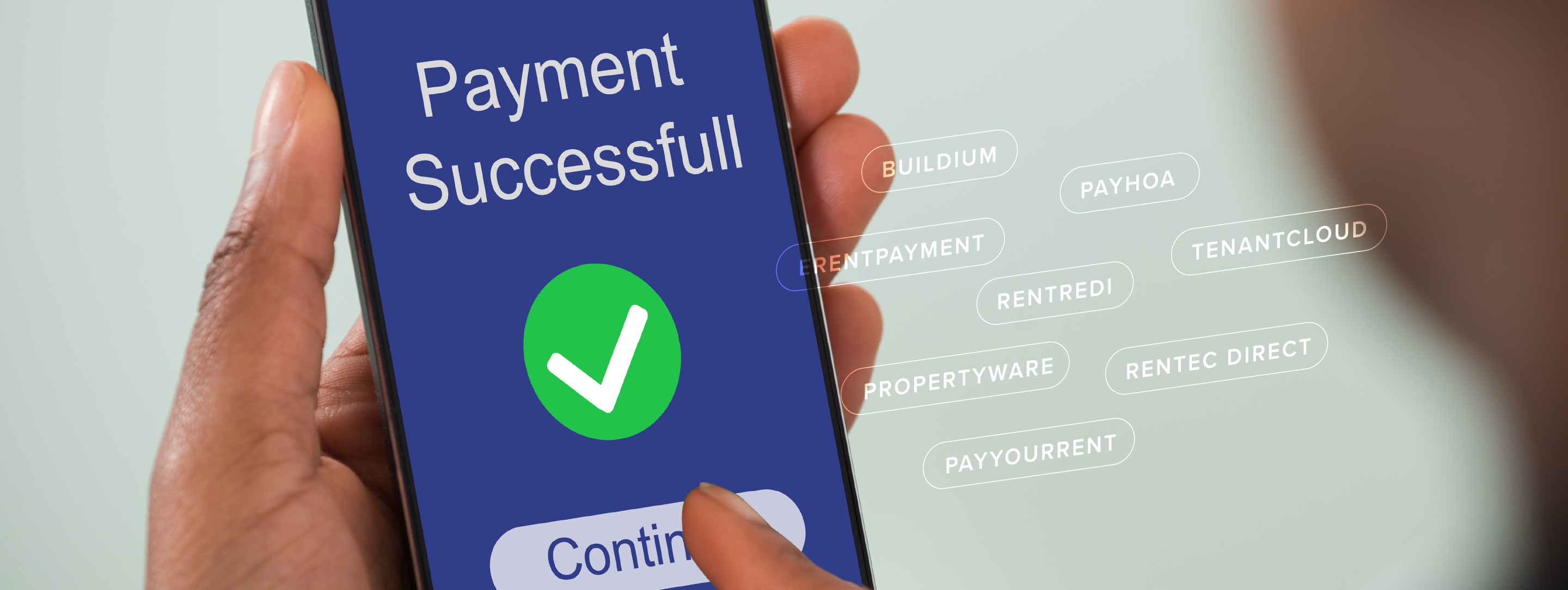
- Reviews of eight of the best online rent payment systems,
- How to choose the right option for your business
The Best Rent Payment App: A Side-by-Side Comparison
| Platform | Best for | Starting price |
|---|---|---|
| Buildium® | All-in-one property management | $62/month (Essential plan) |
| Propertyware® | Large, custom portfolios | $250/month minimum ($1/unit) |
| PayYourRent® | Rent collection without full software | $9.95/month (1–5 units) |
| TenantCloud® | Smaller portfolios, add-ons | $18/month ($15 billed annually) |
| RentRedi® | Tenant-facing payment tools | $12/month (billed annually) |
| Rentec Direct® | Accounting-first collection | $45/month (billed annually) |
| PayHOA® | Community associations | $54/month (0–25 units) |
| eRentPayment® | Low-cost, pay-per-transaction | $3/transaction (Standard plan) |
Our Take
If you manage properties for owners, choose a rent payment system that lives inside a full platform that covers other parts of your business, not a single-purpose app. Once you’re handling accounting, maintenance, and owner reporting, disconnected tools cost you more time than they save.
Buildium is a strong contender. It collects rent, posts the entry to your books, and gives owners and residents their own portals in one place.
What to Look for in a Rent Payment App
Use this as your buyer’s checklist. The right app should satisfy every item below before you sign.
Security
Your residents are handing over bank and card details, so payment security is the first thing to check. Look for encryption, a payment processor that meets industry standards, and clear handling of returned payments.
Mobile Payments
Residents pay from their phones, so the app needs a mobile experience that works. Check for a dedicated resident app, autopay setup, and payment confirmations.
Automated Reminders and Autopay
Reminders sent before the due date reduce late payments more than any follow-up sent after. Look for scheduled reminders, resident-controlled autopay, and automatic handling of returned payments so you aren’t tracking each one by hand.
Flexible Payment Options and Rent Reporting
Residents pay in different ways, so support for ACH, card, and cash widens the number who pay on time. Rent reporting also lets residents build credit from payments they already make, which helps you attract and keep good tenants.
Accounting Integration
This is where single-purpose apps fall short. Rent should post straight to your general ledger so you aren’t re-entering every payment.
Add-Ons and Open API
Your needs change as you grow. Look for an add-on marketplace and an open API so the system connects to the other tools you use.
8 of the Best Online Rent Payment Apps
Below are eight systems worth comparing, starting with Buildium. Each entry covers who it’s best for, a short overview, its payment features, and current pricing. Prices reflect published rates at the time of writing; confirm details on each provider’s site before you buy.
1. Buildium
Best for Managers Who Want Payments Supported by a Comprehensive Platform
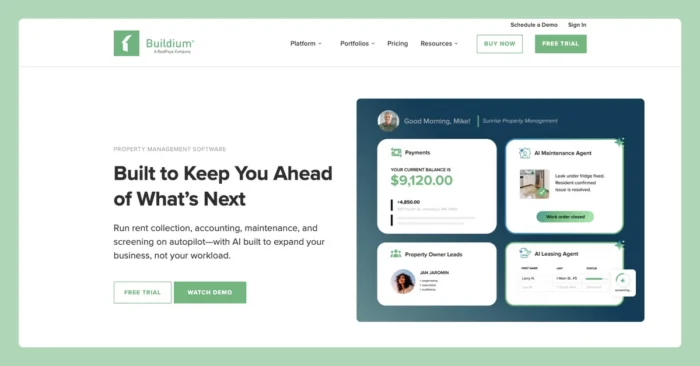
Buildium is a comprehensive property management software solution, serving multiple portfolio types, including single and multifamily residential properties and associations.
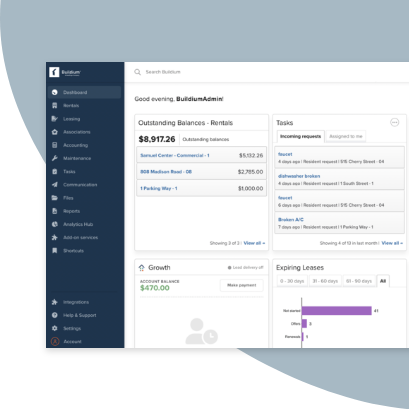
Buildium’s online rent payment system is one of the most robust on the market, offering secure, automated rent collection that integrates seamlessly with its accounting tools. . The software does the heavy lifting at every step of the lead-to-lease cycle, helping landlords and property managers simplify rent tracking, reduce late payments, and automate financial workflows. The Resident Center app allows tenants to make rent payments with just a few taps and includes autopay features with support for multiple payments options, such as credit, debit, and ACH.
But Buildium doesn’t stop at rent collection – it’s a comprehensive property management software solution, serving multiple portfolio types, including single and multifamily residential properties and associations. It handles everything from lead-to-lease workflows, maintenance tracking, analytics, and more. This makes it the ideal choice for property managers who need a fully integrated platform.
Features
Buildium has an array of features that cover both rent collection and broader property management tasks, including:
- Lead-to-lease tools that streamline your workflow from accepting applicants all the way to signing the lease.
- Free website creator and listing syndication to market your listings.
- Automated electronic payments and accounting including 1099 eFiling.
- Analytics and insights tools to measure and report your business growth.
- Tenant and owner portals with online payment, maintenance reporting and tracking, and notification capabilities.
- Top-rated mobile apps (for both your team and your tenants) that allow you to communicate with your renters, manage work orders, and collect payments.
If Buildium doesn’t have a tool you need, one of their Marketplace partners almost likely does. The Marketplace is an ecosystem of apps and digital services that integrate seamlessly with your Buildium account. This sampling of popular partner solutions allows you to:
- Offer incentives for on-time payments
- Streamline collections for HOAs and condo associations
- Get direct survey feedback from your residents
- Easily manage deposits and set up deposit-free alternatives
Pricing
Buildium offers three tiers of pricing, each tailored to different business needs. Each of these plans include core property management and rent payment features such as:
- Online Rent Payment System
- Complete Lead-To-Lease Management
- Accounting
- Maintenance
- Task Management
- Online Portals
- Resident Communications
The pricing tiers scale with your business, depending on the size of your needs.
- Essential: Starts at $62/month and includes Buildium’s core features, including accounting and task management tools.
- Growth: Starts at $192/month and includes reduced incoming ACH fees, unlimited eSignatures, and actionable insights in Analytics Hub.
- Premium: Starts at $400/month for property managers who want to automate their workflows. It includes everything in Growth, unlimited incoming ACH (fees waived), plus access to Buildum’s Open API and Priority Support.
Buildium includes two mobile rent payment apps, one for property managers and Resident Center, a separate app where tenants can make rent payments, maintenance requests and more, available on the Apple App Store and Google Play.
2. Propertyware
Best for Large Portfolios that Need Deep Customization
Propertyware is a solid choice large property management companies that need heavy customization.
The platform supports a two-way open API for custom data workflows. Its focus on large, custom portfolios and its per-unit minimums make it a heavier fit than smaller managers need.
Features
Propertywarre’s features handle payments alongside customization tools for larger operations.
- Accepts card, e-check, and ACH payments, plus RentMoney cash.
- Includes check scanning for mailed payments.
- Sends automated rent reminders to residents.
- Provides owner and renter portals.
- Supports custom fields, dashboards, and reports.
- Manages multiple locations from one account.
Pricing
Propertyware’s pricing plans are billed per unit against a monthly minimum, so the minimum is what most managers start from.
- Basic: $1/unit, month, with a $250/month minimum
- Plus: $1.50/unit, month, with a $350/month minimum
- Premium: $2/unit, month, with a $450/month minimum
3. PayYourRent
Best for Collecting Rent Without a Full Property Management Platform
PayYourRent focuses on mobile-first rent collection rather than end-to-end property management, though some management add-ons are available. It suits owners and managers who want a dedicated payment tool and handle other tasks elsewhere. The trade-off is that it does not replace full property management software.
Features
- Accepts ACH and card payments with a zero-day hold on funds.
- Reconciles deposits in batches for easier bookkeeping.
- Integrates with outside accounting software.
- Sends payment notifications to residents.
- Offers a multi-property dashboard.
- Reports rent to all three credit bureaus.
Pricing
PayYourRent has three pricing options:
- Rental ($9.95/month): one to five units, one ACH included.
- Landlord ($19.95/month): six to 50 units, 10 ACH included.
- Corporate: custom pricing for portfolios above 50 units.
4. TenantCloud
Best for Managers with Smaller Portfolio Looking for À La Carte Options
TenantCloud offers entry-level property management tools with add-ons you can turn on over time, which fits managers with smaller portfolios. It covers payments, leasing, and maintenance at a lower starting price. Higher tiers have more in-depth accounting capabilities and lower ACH rates, so you may find yourself paying more as your business grows.
Features
TenantCloud bundles core management tasks with optional extras.
- Accepts online card and ACH payments with autopay.
- Includes leasing and listing tools.
- Manages maintenance requests and a vendor network.
- Offers tenant screening paid by the applicant.
- Syncs with QuickBooks on higher tiers.
- Adds credit reporting as an option.
Pricing
TenantCloud has four pricing tiers:
- Starter: $25/month ($15/month annual), core tools with ACH at $1.95 per payment.
- Growth: $35/month ($29/month annual), adds features with ACH at $1.75.
- Pro: $60/month ($50/month annual), adds QuickBooks sync with ACH at $1.50.
- Business: custom pricing starting at $100/month.
5. RentRedi
Best for Owners Focused on Tenant Payment Tools
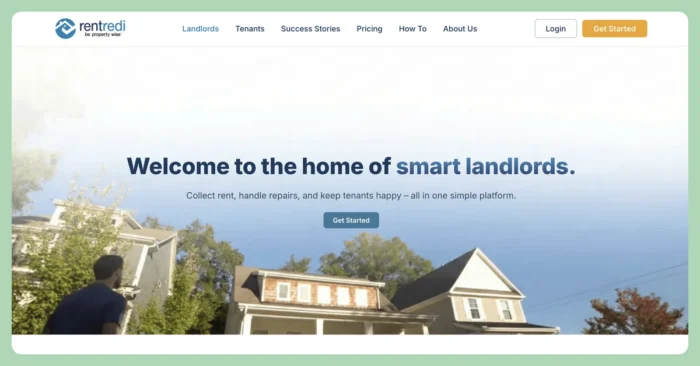
RentRedi is a tenant-focused payment app that adds leasing and maintenance tools. It works for owners who want a strong resident payment experience with core management features. Its business accounting and communication tools are more limited than some other platforms on this list, so it isn’t the best choice for diverse portfolios that need more advanced features.
Features
RentRedi builds its feature set around resident payments.
- Accepts ACH, card, and cash at more than 90,000 retail locations.
- Includes autopay and payment reminders.
- Applies automatic late fees.
- Supports flexible and partial payments.
- Offers screening and online applications.
- Handles maintenance requests.
Pricing
RentRedi has one flat plan with unlimited units, tenants, and teammates, so the billing term sets the rate:
- Annual: $12/month, billed annually (its lowest rate).
- Semi-annual: $20/month, billed every six months.
- Monthly: $29.95/month.
- Tenant screening is tenant-paid at $39.99 ($49.99 with income verification); credit reporting runs $5.99/month.
6. Rentec Direct
Best for Managers Who Want Accounting-Centric Collection
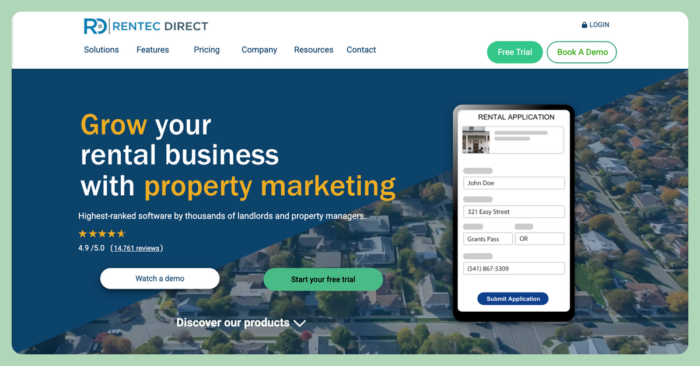
Rentec Direct is property management software built around accounting and reporting. It comes in two versions: Rentec Pro for owners and investors, and Rentec PM for managers, which adds trust accounting and an owner portal.
Features
Rentec Direct pairs payment options with accounting depth.
- Offers free tenant ACH; cards run 2.95%.
- Accepts cash through PayNearMe.
- Supports one-time and recurring payments.
- Handles full and partial payment schedules.
- Imports data to and from QuickBooks.
- Includes an owner portal and trust accounting on the PM version.
- Reports rent through a partner service.
Pricing
- Rentec Pro and Rentec PM: both start at $45/month billed annually on a sliding scale by unit count, with monthly billing running slightly higher.
7. PayHOA
Best for Associations Collecting Dues and Fees
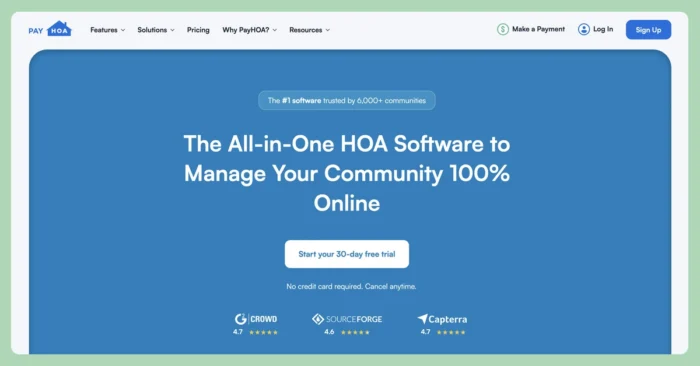
PayHOA is built for community associations to collect dues and fees, not for rental portfolios. It fits association managers and self-managed boards that need dues tracking and owner communication. The platforms scope is limited to associations, so it does not cover rental management.
Features
PayHOA focuses on association dues and records with features to:
- Collect dues by ACH and card.
- Support autopay for recurring dues.
- Sync accounting to the association ledger.
- Track violations and owner requests.
- Handle owner communication.
- Accept lockbox and mailed checks.
Pricing
- Unit-tiered from $54/month billed monthly ($49 billed annually) for 0 to 25 units, up to $275/month for 401 to 500 units.
- 500-plus units: $0.55/unit/month with a $275/month minimum.
8. eRentPayment
Best for a Low-Cost, Pay-Per-Transaction Setup
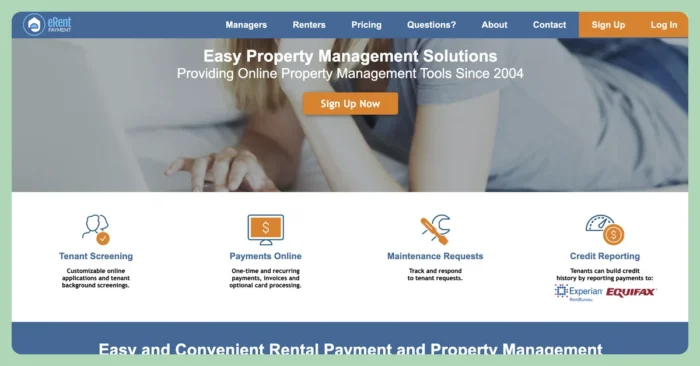
eRentPayment is a low-cost, bare-bones rent collection tool priced per transaction. It suits owners who want basic online collection without paying for broader software. It has no mobile app and minimal management tooling beyond payments, which limits it for anyone managing at scale.
Features
eRentPayment covers the basics of recurring collection.
- Applies automatic late fees.
- Reports rent to help residents build credit.
- Sends payment notifications and reminders.
- Supports recurring payments and blocks partial payments.
- Includes invoice management.
- Adds tenant screening as an option.
Pricing
- Standard: $3 per transaction ($2 for weekly recurring payments).
- Plus ($10/month): includes up to five transactions, then $1 for each additional.
- Tenant screening: $30 each.
How to Choose the Right Rent Payment App for Your Business
Start with the shape of your portfolio, then work down to the details. That order points you to the right system faster than comparing feature lists side by side.
Match the tool to what you manage. If you run community associations, an association-focused system such as PayHOA fits the dues and governance work. If you manage rentals or a mix of rentals and associations, choose software that handles both in one place so you aren’t paying for and logging into two systems.
Then weigh how much accounting depth you need. A single-purpose payment app collects rent, but you still have to move every payment into your books by hand. Software that posts payments straight to your general ledger saves that step and keeps owner reports accurate. The more owners you report to, the more that connection is worth.
Factor in growth. The app that fits a handful of units may gate the accounting, screening, or API you’ll want as you add doors. Look at the tier above the one you would start on, so you know the system can grow with you.
For most managers who want payments inside a full platform, Buildium is a clear choice. It collects rent across ACH, card, and cash, posts the entry to your accounting, gives residents and owners their own portals, and connects to add-ons through its Marketplace of partner integrations and open API as your business grows.
You can put Buildium to work with a 14-day free trial, or sign up for a guided demo to walk through the platform before you commit.
Frequently Asked Questions
Which rent payment app should a property manager use?
If you manage properties for owners, use a system that ties payments to accounting and owner reporting rather than a standalone app. Buildium fits most managers because it collects rent and posts it to your books in one platform. Association managers are better served by an association-focused tool such as PayHOA.
Which app has the most security features?
Look for encryption, a payment processor that meets industry standards, and clear returned-payment handling. Buildium processes payments through RealPage, a registered payment facilitator, and several platforms on this list use comparable bank-grade processing. Confirm each provider’s security details before you commit.
Can residents build credit through rent reporting?
Yes. Rent reporting sends on-time payments to the credit bureaus so residents build credit from rent they already pay. Buildium, PayYourRent, RentRedi, eRentPayment, and others offer some form of rent reporting. PayYourRent reports to all three major bureaus.
How do flexible payment options help retention?
Residents pay in different ways, and supporting ACH, card, and cash raises the number who pay on time. Options such as autopay, partial payments, and retail cash also remove friction that leads to late balances, which keeps residents in good standing and more likely to renew.
Are Venmo and PayPal good for collecting rent?
No. Peer-to-peer apps such as Venmo and PayPal lack the record-keeping, accounting integration, and returned-payment handling that formal rent collection needs. They also make it hard to track partial payments or apply late fees. Use a purpose-built rent payment system instead.
How should I evaluate the total cost?
Look past the monthly plan price to the per-transaction costs. Compare ACH and card rates, any implementation or setup fees, and add-on charges for screening or rent reporting. A low base price with high ACH fees can cost more than a higher plan with free or low-cost transactions, so add up what you’ll actually pay across a typical month.
Buildium’s Commitment to Safe and Secure AI
At Buildium, we believe that AI should be a trusted extension of our platform–not a replacement for human judgement. Our approach to AI is grounded in transparency, education, and rigorous security standards. We deploy AI features with a clear focus: to automate routine tasks while preserving the integrity of sensitive decisions that require human oversight. Lumina AI is built for property managers who value efficiency, security, and trust. We’re not just innovating–we’re doing so responsibly.