

Starting a property management company takes more than a knack for working with owners and residents. You need the right license for your state, a legal business structure, and enough startup capital to reach your first clients.
That’s a lot to plan for, but this guide (and the video above) will give you clear steps, so you can move from planning to signing your first owner with confidence.
What We’ll Cover:
- Licensing and legal setup
- Startup costs and financing
- Services, pricing, and revenue streams
- Marketing to land your first owners
- Choosing the right property management software
What Is Property Management?
Property management is the day-to-day operation of rental property on behalf of its owner. A property management company handles the work owners cannot or would rather not do themselves, such as marketing units, screening residents, collecting rent, coordinating maintenance, and reporting on how the property performs.
What Do Property Managers Do?
Property managers run rental properties for owners who would rather not handle the details. On a given day, that can mean filling vacancies, signing leases, collecting rent, sending a vendor out for a repair, and keeping owners updated on their investment. The job comes down to protecting the owner’s asset while keeping residents satisfied.
What Do Community Association Managers Do?
Community association managers (CAMs) work with the boards of homeowners associations and condominiums rather than with individual rental owners. They run board meetings, enforce the community’s rules, track violations, collect association fees, and maintain shared spaces. Diplomacy matters in this role, because a CAM answers to a board and a whole community at once.
How to Start a Property Management Company
To start a property management company, you need to follow a few basic steps:
- Becoming a Property Manager: Obtain necessary licenses and certifications, such as a real estate broker’s license or property manager’s license. Hone your skills in communication, organization, problem-solving, and financial literacy.
- Setting Up Your Company: Create a business plan covering executive summary, company description, market analysis, and financial projections.
- Understanding Services and Revenue: Define your core service offerings including leasing, rent collection, maintenance, and financial reporting. Establish revenue streams through management fees, leasing fees, maintenance markups, and ancillary services.
- Organizing Finances: Set up a proper accounting system and bank account structure. Track all expenses carefully, including payroll, overhead, and service fees.
- Choosing Technology: Select property management software and tools to run your operations efficiently. Look for platforms that centralize accounting, maintenance requests, rent collection, and owner communications.
- Getting Off the Ground: Decide on your team structure and hire the right people. Determine whether to operate as a solo generalist or build a specialized team as you scale.
- Marketing Your Company: Develop a strong brand and use a multi-faceted marketing strategy. Use your website, content marketing, social media, and local networking to attract clients.
- Bringing On Your First Property: Set a competitive pricing structure based on market research and establish clear contracts. Define management fees, leasing charges, and additional service fees upfront.
- Building Owner Relationships: Maintain open communication with property owners through regular reporting and proactive updates. Position yourself as a strategic partner by offering market insights and demonstrating your value.
- Creating Resident Experiences: Offer amenities and services tailored to your resident population. Handle complaints promptly, create emergency plans, and use technology to improve convenience and communication.
- Managing Your Properties: Set up efficient maintenance and repair processes, simplify your leasing services, and stay compliant with local regulations. Use technology to track work orders, conduct property inspections, and keep your properties up to all safety and legal requirements.
How Much Does It Cost to Start a Property Management Company?
Costs vary depending on location, but as a general planning estimate, most new property management companies spend $2,000 to $10,000 or more to launch. A home-based startup may come in closer to the lower end of that scale, while a company that leases office space and invests heavily in marketing can easily reach $10,000 or higher. Your actual number depends on your state’s licensing rules, whether you work from home or lease office space, and how much you invest in marketing up front.
For a fuller breakdown, see our post on the first 90 days of starting a property management company.
Here are some main considerations from that post to keep in mind:
- Licensing and pre-license coursework, plus exam and application fees, are often your first out-of-pocket costs.
- Business registration as an LLC or corporation, along with registered-agent fees, formalizes your company.
- Errors and Omissions and general liability insurance are usually required before an owner will sign with you.
- Property management software, legal fees for management-agreement templates, and a basic website round out your startup spend.
Plan for a working capital reserve on top of these startup costs. Many new property management companies set aside six to 12 months of operating expenses, because it takes time to sign enough doors to cover your fixed costs, and that reserve keeps your cash flow steady through the early months.
Now, let’s take a closer look at each of the nine steps we mentioned above.
#1: Becoming a Property Manager
Getting started as a property manager typically requires at least a high school diploma or equivalent. A college degree in a field such as business administration or real estate, or a specialized property management program, can give you a valuable head start.
In addition to formal education, developing a well-rounded skill set can make you a more effective property manager. Core skills that can benefit you include:
- Communication: You’ll need to manage interactions with property owners, residents, and vendors.
- Organization: Handling multiple properties requires keen organizational skills to manage leases, contracts, and maintenance requests.
- Problem-solving: Property management often requires quick thinking to address issues such as tenant concerns or unexpected maintenance needs.
- Financial literacy: Understanding budgeting, forecasting, and general accounting will help you track expenses and income.
If you want a fuller picture of the paths into the field, our post on how to get into property management walks through education, licensing, and experience in more detail.
What Property Management Certifications and Licenses Do You Need?
There are only a handful of states that don’t require some kind of licensing for property managers. Before you set up your business, make sure you have the up-to-date licensing to legally operate your property management company in your state, especially since housing regulations tend to change fast these days.
| License Type | Requirements | Coverage |
|---|---|---|
| Real Estate Broker’s License | Coursework and exam | Property management, insurance, taxes, contracts |
| Property Manager’s License | Coursework and exam | Leasing, contracts, tenant laws |
In most states, property managers must hold a property management license or a real estate broker’s license.
#2: Setting Up Your Property Management Company
Before you do anything else, you’ll need to be properly licensed, file your business name and create a business plan. It’s best to start with a business plan first, which will help you evaluate the opportunities in your target market and outline your goals as you build a property management business.
How Do You Write a Property Management Business Plan?
A business plan is the roadmap for your property management company. It sets your goals, shows how you will reach them, and gives lenders and partners the confidence to back you.
A detailed plan usually covers these components:
- Executive Summary: A short, high-level overview of your company, mission, goals, and core values. Write it last, once your strategy is clear.
- Market Analysis: Your target market, your direct and indirect competitors, and a SWOT analysis that shows where you fit and how you stand out.
- Organizational Structure: Your ownership setup, your management team, and the roles you need to hire for as you grow.
- Service Offerings: The property types you manage and how you handle maintenance, tenant management, and any additional services.
- Marketing Strategy: Your branding and positioning, the channels you will use to reach owners, and how you will turn prospects into clients.
- Operations Plan: Your office setup, your day-to-day processes, and the technology and software you will use to run them.
- Financial Plan: Your revenue streams, your pricing strategy, and financial projections such as an income statement, a balance sheet, and a cash flow statement.
- Compliance and Risk Management: Your legal and licensing requirements, your insurance needs, and the strategies you will use to reduce risk.
Our property management business plan post walks through each part in detail and includes a free template to get started.
Pro Tip: Treat your business plan as a living document. Update it as your company grows, because keeping it current helps you make sharper decisions and keeps investors confident in your direction.
How Do You File Your Property Management Business?
Next, you’ll need to file your business for tax purposes and form a legal business entity. This is important so that your personal assets are protected and separate from your property management business.
Many property management firms are set up as an LLC (limited liability company) because it protects your personal assets while keeping your taxes simple, but S-Corps and C-Corps are also strong contenders with more legal protections.
You’ll have to think about whether you want to file as a pass-through business such as an LLC, where money passes through the business directly to you, or whether you want to file as a C-corporation and be paid as an employee.
C-corporations risk having a double taxation problem, but you shouldn’t have to worry about that if you have a good accountant who knows the laws. S-corporations allow profits to be passed through directly to the shareholders as personal income, so there is no chance for double taxation. The profits are taxed as personal income instead of business income.
Be sure to consult a qualified accountant or business attorney to help you determine the best structure for your property management company and stay compliant with local regulations.
#3: Understanding Property Management Services and Revenue Streams
Before you get into the details of business plans and licenses, it’s helpful to understand what a property management company actually does and how it makes money. At its core, your business will offer services that take the operational burden off of property owners. This creates value for your clients and generates revenue for your company.
Core Service Offerings
Most property management companies build their business around a few key services:
- Leasing and Tenant Placement: This includes marketing vacant units, showing properties, screening applicants, and handling lease agreements. It’s the front-line work of filling properties with qualified residents.
- Rent Collection: You’ll be responsible for collecting monthly rent payments, following up on late payments, and managing the flow of funds to property owners.
- Maintenance and Repairs: This involves handling resident maintenance requests, coordinating with vendors, and conducting regular property inspections to keep properties in good shape.
- Financial Reporting: Property owners need clear visibility into their investment. You will offer regular financial statements, track income and expenses, and help with year-end tax documentation.
How You’ll Generate Revenue
Your services translate into several common revenue streams:
- Management Fees: Your primary source of income, typically charged as a percentage of the monthly rent collected (often between 8 and 12 percent) or as a flat monthly fee per unit.
- Leasing Fees: A one-time fee for finding and placing a new tenant, often equal to a portion of the first month’s rent.
- Maintenance Markups: When you coordinate repairs, you can add a small percentage to the vendor’s invoice to cover your administrative time.
- Other Fees: You can also generate income from lease renewal fees and other ancillary services.
Understanding these fundamentals will help you define your company’s value and structure your business for profitability from day one.
How Much to Charge for Your Property Management Services
Your fees need to cover your costs, pay your team, and stay competitive in your market. Most companies build their pricing around a monthly management fee plus a few one-time charges.
Here are the ranges many property management companies work within, but be sure to do your own research before setting your fees:
| Fee | Typical Range | What It Covers |
|---|---|---|
| Monthly management fee | 8 to 12 percent of monthly rent | Rent collection, tenant communication, maintenance coordination, and reporting |
| Leasing or tenant placement fee | 50 to 100 percent of one month’s rent, or a flat $500 to $1,500 | Marketing the unit, screening applicants, and signing a new tenant |
| Lease renewal fee | $100 to $350 | Paperwork and negotiation to renew an existing tenant |
| Setup or onboarding fee | $100 to $350 | Property intake, photos, inspection, and system setup for a new owner |
| Maintenance markup | 10 to 15 percent of the invoice | Coordinating vendors and overseeing repairs |
Pro Tip: Set your rate on the value you deliver, not only the market average, and put every fee in writing so owners know exactly what they are paying for.
#4: Organizing Your Finances
Plan your finances first. Your property management business plan should include a revenue goal for your first fiscal year. Map out your expected income, projected expenses, and emergency reserves before you start operations.
How to Set Up Your Property Management Accounting
Keeping track of your owners’ properties can be as basic as updating a spreadsheet (although we don’t recommend that). Comprehensive property management accounting platforms can help you track rent and fees, monitor expenses, pay regular bills, simplify tax preparation, and provide financial transparency to your clients.
Property management accounting software can also help you track both money coming in and money going out. Income can include rent and other revenue streams received from renters. Money going out can involve repairs and other payments to vendors for maintenance.
Pro tip: Setting up your bank account structure will create the foundation for disciplined accounting. First, you’ll always want to keep your security deposits in a legally compliant trust account, with a separate account for your owners’ properties and yet another operating account for your business.
If you need an accounting refresher (like pretty much everyone), check out our Accounting Survival Guide.
What Expenses Should You Expect?
Recording every monthly, quarterly, and yearly expense you have is key to running a successful property management business. Don’t leave anything out. Keeping track of every penny that goes out the door will help you set realistic revenue goals and help you stay out of financial trouble.
Your expenses will most likely include:
- Payroll and Vendor Fees: Salary for your employees (and yourself), as well as the money your contractors charge you for services.
- Overhead: Supplies, rent, and utilities for brick-and-mortar locations.
- Service Fees: Any software you use to manage your business or to help you find prospective property owners and residents.
- Membership Fees: Cost of membership in property management associations.
Forecasting Revenue and Setting Goals
You can expect most of your revenue to come from management fees, which is usually a percentage of the rent charged. Some property management businesses, however, charge a flat fee for basic services. Owners can then opt for more services for a higher fee.
Other income will come from late fees, key or lock replacement fees, finder’s fees for bringing in residents, maintenance bill mark-ups, and other smaller fees and charges. Check out a full list in this post: Income and Expenses: What Property Managers Need to Know.
#5: Choosing Property Management Technology and Software
You’ll need software tools to run your business efficiently. Common tools property managers use include:
- QuickBooks: Manages invoices, P&Ls, taxes, and audits for your operating account
- Google Workspace: Offers document creation, spreadsheets, presentations, and cloud storage
- MailChimp: Helps organize email communications
- SurveyMonkey: Gathers resident feedback
List your business functions, then find tools that save you time and money. For property managers, purpose-built platforms cover those needs without cobbling together too many separate tools.
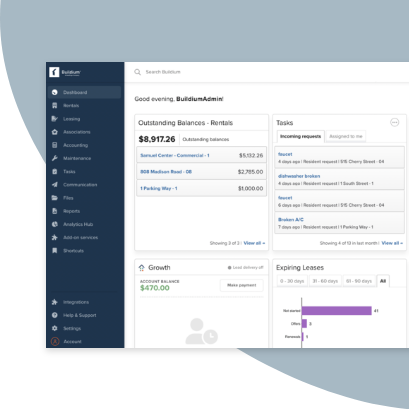
Buildium, for instance, lets you accept rent payments online, centralize your accounting, and handle maintenance requests, property inspections, and renters insurance in one place. Mobile-enabled tools also keep your business running from anywhere.
Pro Tip: A well-integrated software system improves your operational efficiency and also improves the experience for property owners and residents, positioning your property management business as organized and tech-savvy.
#6: Getting Your Property Management Business Off the Ground
Line up your team and tools. Once you’ve laid the groundwork, it’s time to start getting the pieces together that will fuel your efforts, the people and the systems they’ll use.
How Should You Structure Your Property Management Team?
There are two basic models you can set up for your property management business:
- Solo Generalist Model: You handle all management responsibilities including leasing, inspections, resident communications, owner communications, rent collection, and maintenance. This approach allows you to build expertise across multiple functions before expanding.
- Specialized Team Model: You hire staff members to perform specific roles, such as one person handling leases while another manages maintenance. This creates a more defined organizational chart with tiers of staff reporting to you.
Defining Your Team
If you’re just starting out, your staff is going to be minimal. It may even just be you for the time being, and that’s fine. As your property management business grows, you’ll organically bring on people to help you.
Your staff may be made up of full-time or part-time employees, or contract workers. The first step is to decide what kind of work you need done and then determine if it’s worth putting someone on the payroll or outsourcing.
Full- or part-time employees you may consider are:
- Additional property managers
- Admins or receptionists (if you have a brick-and-mortar location)
- Maintenance staff
- Sales representatives
- Leasing agents
- Showing coordinators
- Move-out coordinators
- Field managers
- Maintenance managers
- Office managers (for a brick-and-mortar location)
- Service coordinators
- Marketing specialists
And just because they aren’t on the payroll, doesn’t mean that a team member or company isn’t a dire need. Below are some contractors that property managers rely upon:
- Accountant (a good accountant will always be your most trusted advisor)
- Real estate lawyers (also a partner to make sure you are in compliance with the law and protected from potential liability)
- Contractors such as painters, plumbers, roofers, groundskeepers, pool cleaners, locksmiths, chimney sweeps or HVAC specialists
- Customer/resident service reps
- Information technology (IT) staff
When hiring any vendor, make sure to get a copy of their license, insurance certificate, and bond certificate (if they have one) to protect your company if something goes wrong. Also, try to negotiate a reduced rate for your property owners, since they will appreciate that you worked hard to save them money.
Pro tip: Property management software can reduce the need for a large staff by centralizing operations. For example, Buildium centralizes and automates tasks across operations from accounting and tax prep to communication and maintenance management, allowing you to run your processes more efficiently as you grow.
For more, read our post on hiring vs investing in technology.
Property Management Staffing: Finding and Hiring the Right People
Once you’ve determined which full- and part-time positions you need, it’s time to find the staff that can make it happen:
- Write clear job descriptions for each role.
- Use ads that speak to the culture and benefits of your property management company.
- Post your ad in the right places for your audience.
Associations such as the NARPM have their own job boards for property managers and most mainstream job sites such as Indeed and ZipRecruiter also list related jobs.
Once you’ve hired the right people, you’ll want to keep them. You also want them to become evangelists for your company and culture. Remember, happy employees are one of the most powerful tools for attracting new talent, as well as representing your brand to residents and property owners.
To keep your employees happy and strengthen your business, create a strong company culture from the get-go:
- Offer competitive benefits.
- Stay connected with their needs.
- Support their learning and professional development.
#7: Marketing Your Property Management Company
A big part of getting your property management business to take off is your branding and marketing, which will help you attract property owners and increase your portfolio.
Your branding defines who you are and what you do as a company. It should be a direct representation of your culture and values. Are you a boutique property management company that offers specialized services? Do you focus on HOAs or luxury Class A properties? All of these factors contribute to your brand.
Once you define your brand, it’s time to start marketing. Whether you do it yourself or hire a firm, you should push your business actively through your website, social media, paid advertising, and local networking.
How to Grow Your Portfolio from Zero
At this point, you may have only one property in your portfolio, or none at all. You’ve got to bring in a lot of leads to start building your portfolio, something called “feeding the top of the marketing funnel.”
This is when you cast a wide net, pull in potential property owners and investors and then start talking to them about your property management services to gain their interest and bring them closer to signing with you.
But those leads don’t come from thin air. You need to start with a multi-faceted marketing strategy to attract potential clients. You can do that with the following tools:
- Your Website: Your website is your online storefront. Optimize it for both property owners and residents to make a great first impression with your branding.
- Content Marketing: Create a blog that addresses owners’ and residents’ concerns. Doing so sets you up as an expert in your field, a trustworthy partner in offering the best services for owners and residents alike.
- Social Media: Get on the right social media channels for your audience and start posting. Engage with your followers by asking them to comment, and always respond to requests, complaints, or compliments. You can also share content and comment on others’ posts, as well.
- Review Sites: If your owners or residents are happy with your services, ask them to write a review on Google, LinkedIn, the Better Business Bureau, or Yelp to build your reputation and attract more prospects.
- Local Business Events: Make connections and share your expertise to attract new business in your community and stoke word of mouth, especially with local investor groups.
- Paid Search: Target certain search terms that potential clients are using and bid on them to have your name appear first in search.
- Matchmaking and Marketplace Services: Use one of these services, such as All Property Management, to do the marketing work for you.
- Professional Referrals: Since many property managers work in real estate and self-employed roles, encouraging referrals from other professional contacts such as brokers or investors is a start to building long term, lucrative relationships.
Pro Tip: Using multiple marketing channels, both online and offline, will help you reach a broader audience and increase your brand’s visibility.
A comprehensive marketing strategy helps you attract new clients, grow your portfolio, and position yourself as an authority in the property management industry.
#8: Bringing On Your First Property
You have your first client. Congratulations! Now it’s time to talk about fees and get that contract signed. Here are some tips to help you determine your fee structure and how you should handle contracts.
How Do You Set a Pricing Structure?
It’s mandatory to do your research when it comes to setting fees. Check out what other property management companies are charging for similar services on comparable properties. Look at your own revenue goals to see if you can offer more competitive pricing and consider the types of properties you are taking on.
Staying competitive may depend on the pricing structure and what’s bundled in your ongoing management pricing, which includes your baseline service. You want to make sure you don’t assume a one-size-fits-all approach that makes it near impossible to turn a profit.
If you are already going in with a sizable portfolio, you’ll need to know how much you’ll pay each property manager. If you bring them on as independent contractors, will you compensate them by the number of units, gross rents, or percentage of rent collected? These are all tricky questions that can be answered by knowing your market and its workforce.
There are three common ways property management companies set their ongoing management pricing structure:
| Pricing Model | Structure | Best For |
|---|---|---|
| Percentage-Based | 8 to 12 percent of monthly rent | Full-service management |
| Flat Fee | Fixed monthly rate per unit | Predictable budgeting |
| Per-Project | One-time fees for specific services | Ad hoc service needs |
- Percentage-Based: Some suggest that property management pricing fall between 8 and 12 percent of the rent, while others recommend different rates. The reality is that this will depend on your local market and your own services formula.
- Flat Fee: Some property management companies charge a flat price for basic services and offer other services on a package or à la carte basis. This allows property owners to customize their services and choose only what they need.
- Per-Project: If your property owner needs services on an ad hoc basis, this is the most affordable option. They won’t pay for services they don’t use regularly. Common per-project pricing includes leasing charges, maintenance charges, and inspection charges.
In addition to management pricing, consider charging for the following services:
- Setup: This is a one-time charge for getting set up in your system. It’s even easier to justify when you have a property management platform in place.
- Leasing: When a property is vacant this one-time charge helps you cover your services from finding a new resident to getting them moved in (for example, rental listing syndication, showings, screening, leasing, and move-in).
- Lease Renewal: This charge covers lease renewals, which can be a smart idea if there is a rigorous renewal process in place.
Again, knowing your market and having a firm idea of how you spend your resources will give you some more direction on how to best set your pricing, which will adapt over time.
Pro Tip: Be transparent with property owners about all fees involved and highlight the value you offer for each service. This transparency builds trust and sets the stage for a positive working relationship.
Creating Solid Property Management Contracts
You know the old saying, strong fences make good neighbors? Solid property management contracts work the same way, creating stable business relationships. A contract should spell out the roles and responsibilities of the property management company by including:
Compensation and Coverage:
- Management pricing
- Off-duty coverage
- Work hours and vacation time
- Workman’s comp, liability insurance, and indemnification from loss and damages
Operations and Budgets:
- Whether you or your property managers will live on-site
- Maintenance and repair budgets
- Emergency funds
Service Terms:
- A detailed description of the services promised
- A timetable for invoicing and any penalties for non-payment
We recommend to always have a lawyer look over your contracts to make sure everything is locked down, and to put together a template for all of your contract negotiations.
By clearly establishing your pricing structure and contract terms, you’ll build credibility with property owners and set a professional tone for your property management business.
#9: Building Owner Relationships and Retention Strategies
Keep owners for the long term. Your success in property management depends heavily on your ability to build and maintain strong relationships with property owners. A happy client is one who stays with you, trusts your judgment, and refers new business your way.
This starts with clear communication and consistently demonstrating your value.
Set Expectations from the Beginning
Before signing a management agreement, have a frank conversation with prospective clients. Understand their goals, communication preferences, and expectations for their property. In turn, clearly explain the services you offer, your fee structure, and how you handle key situations such as maintenance and resident communication.
Maintain Open and Proactive Communication
Don’t wait for owners to ask for updates. Keep them informed with regular, easy-to-understand reports on their property’s performance. A dedicated owner portal is a great tool for this. It gives owners 24/7 access to financial statements, maintenance updates, and important documents.
Show Your Value Through Reporting
Consistently deliver clear financial reports that show income, expenses, and net profit. This transparency builds trust and proves that you are managing their investment responsibly. Highlight how your management is protecting their asset, such as through preventative maintenance or by securing high-quality residents who pay on time.
Be a Strategic Partner
Go past day-to-day tasks. Offer insights on market trends, suggest property improvements that could increase rental income, and identify opportunities for them to grow their portfolio. When owners see you as a strategic advisor, not just a service provider, they are far more likely to view your partnership as indispensable.
#10: How To Create Your Resident Experiences
You and your team will interact with residents every day. Creating a memorable resident experience, where renters are engaged and happy, keeps your properties running without disruption, helps you attract other residents through word of mouth and builds your reputation with property owners.
To do that, target the right residents for your properties, foster a sense of community, and keep the lines of communication open.
Offering the Right Experience and Amenities for Your Residents
The kind of resident experience and service you offer will depend on the preferences of the residents your properties attract. Residents are looking for more than four walls and a roof. They want a convenient arrangement that lines up with their lifestyle and feels like home.
Apartments in the city may attract young professionals or retirees looking to downsize. Houses and condos may attract families.
Take your resident population into consideration for every aspect of your property management business, from emergency planning to facilities to run-of-the-mill communications.
For example, an older population may be more comfortable receiving communications via email or letters in their mailboxes. Meanwhile, a young family may prefer text notifications.
Pro tip: Use an online resident center (or a portal) so your residents can access the information they need, pay their rent, and communicate with you through the convenience of a mobile app.
If you are managing multifamily properties with communal spaces, consider the kinds of amenities you’d like to offer your residents. Perks such as these help properties stand out:
- An event calendar
- Workspaces
- Outdoor fitness areas
- Mailboxes for package deliveries
Often, you won’t be able to control what the amenities are, but you can create a strong resident culture and control how you market them.
How to Handle Complaints, Requests, and Disputes
For every complaint, request, and dispute, hear out your residents and let them know that you take their issues seriously. If it’s something you can resolve or fix, do so as quickly as possible and give your residents a timeline.
If it’s something you can’t fix, explain why.
How to Create Emergency Plans
Property management companies need emergency plans for everything from fires and burst pipes to earthquakes and hurricanes. Your plans should be clear, detailed, and tailored to the kinds of emergencies and natural disasters common in your area.
Learn more about creating these plans in our posts on emergency preparedness and disaster preparedness.
#11: Managing Your Properties
Manage properties and stay compliant. Once you decide, or the market decides for you, which kind of properties to target (single-family, multifamily, condos, etc.), it’s time to start thinking about the requirements you’ll need to meet to manage them. Effective property management involves regular maintenance, efficient leasing practices, and strict compliance with local regulations.
Handling Maintenance and Repair
Choosing to offer maintenance and repair services could be a big sell for potential clients who don’t want to deal with the time and cost of maintaining their properties or fixing unexpected issues. And it’s a win for your business, too, since you can mark up the cost of repairs while taking one more worry off your property owners’ plates.
Here are some things to keep in mind if you choose to offer those services:
- Include a clause in your contract that spells out exactly which services you will offer and how they will be paid for.
- Make sure your liability insurance covers all work you do as well as all employees and contractors who do the work for you.
- Put a reliable work order system in place. You can even use a platform such as Buildium to encourage residents to submit work orders online. Then use it to track the work from start to finish.
Getting the Right Insurance for Your Property Management Company
Before you take on your first client, put the right insurance in place. The correct coverage protects your business and your personal assets if a claim comes your way.
- Key point: General liability insurance covers bodily injury and property damage claims that come out of your operations, and most owners want proof of it before they sign.
- Key point: Errors and Omissions (E&O) insurance covers claims from professional mistakes, such as a missed deadline or a paperwork error, that general liability will not.
- Key point: Workers’ compensation insurance covers work-related injuries once you hire employees, and most states require it from your first hire.
Assembling Your Leasing Services
A big value add that many property management companies offer is filling vacancies. The goal is to minimize unoccupied units that will cost you and your owners money in lost rent.
Make sure you have a lean and mean process to get high-quality residents into their homes quickly, efficiently, and with a strong first impression from lead to lease. Technology can deliver in spades here.
Here are some of the ways technology can be the rocket fuel for your leasing process:
- Marketing Listings: To market a listing, you’ll need to advertise it and attract quality renters. Many property management platforms have rental listing syndication that you can use to blast out a single listing to multiple sites such as Zillow® and Trulia® with one click.
- Showings: Once you attract interested renters, you’ll schedule showings, which can be a full-time job in itself. That’s why showings and scheduling software can be a massive time saver.
- Tenant Screening: Next, you’ll want to screen applicants with software built for the job.
- Leasing: Finally, you want to make the leasing process fast, convenient, and 100 percent organized. Property management software also gives you an easy way to avoid all the paperwork and collect signatures electronically and stored online.
- Property Inspections: As residents move in and out, and also during the term of a lease, you’ll want to conduct inspections. Why not conduct your inspections through a mobile app? Doing so will help you record damage past normal wear and tear, get it repaired, and paid for by the right party, while staying compliant with city and state building codes.
Pro Tip: Having a well-organized leasing process attracts high-quality residents and also improves the reputation of your property management company as professional and efficient.
How to Keep Your Operations Compliant
Compliance is a very big part of your job as a property management company that can’t be overlooked. You’ll need to stay on top of rules and regulations on things such as elevators, sanitation, and building permits.
You will also have to pass regular inspections with the fire department, which will look for proper placement of smoke detectors, extinguishers, and signage for fire exits.
Key Areas of Compliance:
- Building Codes and Safety Regulations: Regularly inspect properties to make sure they meet building codes and have the necessary safety equipment, such as smoke detectors, fire extinguishers, and emergency exit signage. Stay up to date with local fire department requirements for inspections.
- Fair Housing Laws: Familiarize yourself with the Fair Housing Act, part of the Civil Rights Act of 1968, which makes it unlawful to discriminate in housing-related activities based on race, color, religion, sex, national origin, familial status, and disability. Complying with these regulations is important to avoiding legal issues and fostering an inclusive resident community.
- Lease Agreements and Rent Regulations: Make sure lease agreements are legally compliant and updated according to state and local laws. For properties in rent-controlled areas, adhere to the related regulations.
- Environmental Health and Safety Standards: Be aware of environmental standards, such as lead paint disclosures, mold prevention, and proper waste disposal, which can vary by location.
Pro Tip: Regularly review legal updates or partner with a real estate attorney to stay compliant with the latest regulations.
What's Your Next Move?
Starting a property management company involves a lot of moving parts, but you don’t have to do it alone. Break the process down step-by-step, surround yourself with a reliable team, and use the right technology to simplify your tasks.
Key Takeaways:
- Get licensed for your state before you take on clients.
- Set up your legal structure, accounts, and insurance early.
- Plan your startup costs and keep a cash reserve for the first year.
- Win your first owners with clear pricing and steady communication.
With careful planning and dedication, you’ll soon be on your way to building a thriving property management company.
If you’re ready to see how the right software can help you hit the ground running, Buildium can support your new business from day one. You can give the platform a try with a 14-day free trial or by signing up for a guided demo with a product specialist.
Frequently Asked Questions About Starting a Property Management Company
What Are the First Steps to Start a Property Management Company?
Research your local market, develop a business plan, register your business, and obtain necessary licenses and certifications.
How Can I Attract My First Clients?
Use your existing network for referrals, create a professional website, attend local real estate events, and use platforms such as All Property Management to connect with property owners.
What Software Should I Use for Property Management?
Look for software that offers tenant screening, rent collection, maintenance tracking, and financial reporting. Platforms such as Buildium bring these tools together in one place.
How Do I Handle Owner and Resident Relationships?
Communicate clearly and consistently, address concerns promptly, and maintain professionalism to build trust.
Is Owning a Property Management Company Profitable?
It can be, though profits depend on how many units you manage and how well you control your overhead. Profit tends to come from volume and owner retention over time rather than from any single account, so companies usually grow more profitable as they add doors and keep owners long term.
How Long Does It Take to Start a Property Management Company?
For most people it takes three to six months, driven mostly by broker licensing timelines. Add a few weeks for business registration and account setup before you take on your first property.