
Managing residential rental properties in 2026 means balancing rising expectations from residents and owners with the realities of limited time and staff. Online payments, faster maintenance response times, clear reporting, and flexible workflows are no longer optional. They are part of doing business.
That is why many property managers turn to property management software such as TenantCloud vs Buildium when evaluating software. Both platforms help centralize day-to-day operations, but they are built for different stages of growth and different business priorities.
In this guide, we will walk through a detailed comparison of TenantCloud and Buildium. By the end, you should have a clearer sense of which platform fits your portfolio today and which one can support where your business is headed next.
Buildium at a Glance
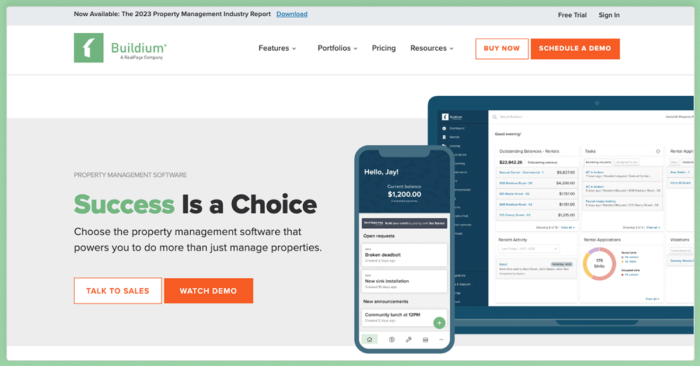
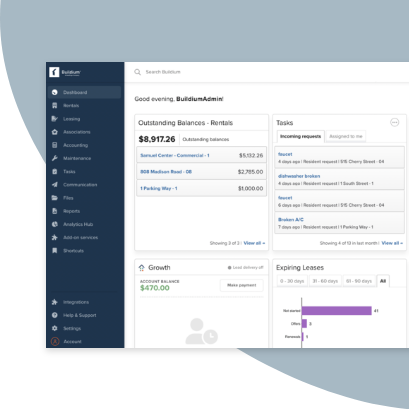
Buildium is a comprehensive property management platform designed for residential property management and community association management companies. It supports portfolios of all sizes, from small teams managing a handful of units to large businesses overseeing thousands of doors.
Buildium brings together leasing, accounting, maintenance, resident communication, and reporting in one connected system. What sets Buildium apart is its ability to adapt as your operations become more complex while staying easy to use. The platform combines advanced automation, flexible customization, and Lumina AI to help property managers handle higher volumes of work without adding unnecessary manual steps.
Key Features
Buildium offers a robust suite of features purpose-built for professional property management:
- A Resident Center, complete with a mobile app, where tenants and homeowners can make payments, submit maintenance requests, and communicate directly with your team.
- Customizable fields, templates, dashboards, and reports to meet the specific needs of your business, residents, and clients, while saving you time on repetitive tasks.
- A complete maintenance management system, including work order creation, real-time tracking, project-level management, and vendor coordination.
- Automated electronic payments for rent, association dues, and fees, plus robust accounting tools with built-in 1099 eFiling.
- Comprehensive analytics and reporting through Buildium’s Analytics Hub, giving you insights into performance, revenue, and leasing activity.
- Association management tools for violations tracking, architectural reviews, and board communications—all accessible from one platform.
- Mobile apps for both managers and residents, enabling you to oversee your portfolio from anywhere.
- Extensive support and onboarding resources including a U.S.-based support team accessible through live chat and email, live phone support, structured onboarding programs, and an in-depth knowledge base and user forum.
- Marketing and leasing tools such as free property websites, online rental applications, tenant screening, and eSignatures for faster lease signing.
- Lumina AI, a collection of tools powered by agentic AI that feels like having more hands to support routine tasks such as tenant communication, maintenance coordination.
- Workflow Automations that trigger approvals and updates automatically, reducing delays and human error.
Buildium also features a Marketplace of specialized partner integrations and an open API. These features make it easier to connect third-party tools and customize workflows as your portfolio grows, without relying on disconnected systems or manual workarounds.
TenantCloud at a Glance
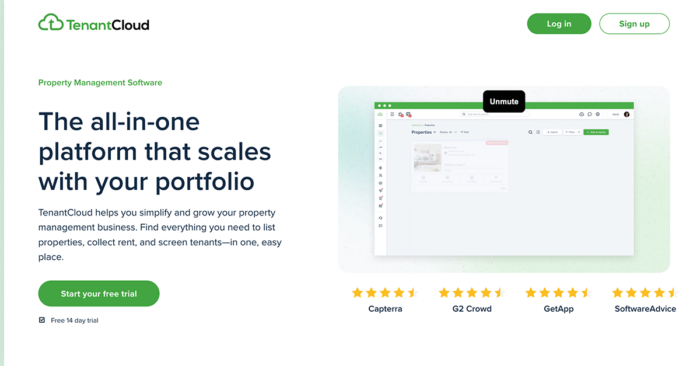
TenantCloud is a cloud-based property management solution designed primarily for independent landlords and smaller property management operations. The platform focuses on providing affordable tools for managing tenants, collecting rent, and tracking basic financial activity.
TenantCloud appeals to users who want a simple setup and lower entry cost. It offers core features such as online rent collection, maintenance requests, basic accounting, and tenant screening. For landlords or managers with relatively straightforward portfolios, TenantCloud can be an accessible starting point.
Key Features:
- Online rent collection and recurring payments
- Tenant and owner portals
- Basic income and expense tracking
- Maintenance request submission
- Rental listings and online applications
- Document storage and basic reporting
Features to Look for in Property Management Software
When choosing property management software, certain features have an outsized impact on daily operations and long-term growth. Understanding these areas helps put individual tools into context.
Software you should consider typically include:
- Accounting tools that accurately track income, expenses, and owner funds while supporting compliance
- Leasing tools such as online applications, screening, and eSignatures to reduce vacancy time
- Maintenance tools that centralize requests, vendor coordination, and service history
- Marketing tools to promote listings and track leads
- Communication tools that keep residents and owners informed
- Mobile access for managing tasks on the go
- Advanced automation and AI capabilities that directly support your existing workflows
- Integrations and automation that reduce manual work and support scalability
With those priorities in mind, here’s how TenantCloud and Buildium compare.
TenantCloud vs Buildium: Pricing
Pricing structures reflect the audiences each platform serves. Buildium’s pricing is designed for professional property managers who need a full-featured system. Even entry-level plans include accounting, portals, and maintenance tools, with higher tiers adding analytics, automation, and API access.
TenantCloud is more affordable upfront and offers a free option, which can be attractive for landlords managing a small number of units. As portfolios grow or operational needs increase, additional paid features may be required.
Buildium Pricing
Buildium offers three pricing tiers designed to support property management companies at different stages of growth. Pricing is typically based on unit count, with per-unit costs decreasing as portfolios scale.
Essential (starting at $62/month) is designed for property management companies that need reliable accounting and operational fundamentals. The plan includes
- extensive accounting features with 1099 eFiling and tax preparation
- maintenance management, and tasks and violations tracking.
- a dedicated Resident Center
- an Owner Portal for clients
- rental listing syndication and marketing tools
- tenant screening and applicant management
- lead-to-lease management tools
- Buildium Assistant,
- onboarding and ticket-based support
Growth (starting at $192/month) is built for property managers looking to expand without worrying about outgrowing their software. The plan includes:
- everything in Essential
- free property inspections
- deeper analytics and insights across payments, resident activity, leasing cycles, and revenue streams
- unlimited eSignatures
- custom fields
- more advanced AI, reporting, and workflow automation features
- live phone support
Premium (starting at $400/month) is intended for businesses managing more complexity or higher volumes. The plan includes:
- everything in Growth
- Buildium’s Open API access
- a dedicated growth consultant
- Marketplace Premium integrations
- expanded AI and automation capabilities, including Lumina AI Workforce and AI Bill Scan
Buildium’s pricing reflects a scalable platform built for professional property managers who need audit-ready accounting, automation, and flexibility as their portfolios grow.
TenantCloud Pricing
TenantCloud offers multiple pricing tiers designed for landlords and small property management operations with varying portfolio sizes and feature needs.
Starter (starting at $18/month): Geared toward DIY landlords and small portfolios. The Starter plan includes:
- online rent collection
- maintenance management, listing syndication
- tenant screening
- basic accounting
- digital lease signing
Growth (starting at $35/month): Built for landlords managing more properties, the Growth plan includes:
- everything in Starter
- enhanced reporting
- property message boards
- move-in and move-out inspections
- additional operational tools
Pro (starting at $60/month): Designed for more active portfolios or small teams, the Pro includes:
- all Growth features
- QuickBooks Online sync
- owner portals
- premium lead access
- expanded maintenance and fee management capabilities
Business (custom pricing): Intended for larger portfolios or teams that need more flexibility, the Business includes:
- advanced customization
- team permissions
- task management
- tailored support, with pricing based on unit count and selected features
TenantCloud also offers a free plan with basic rent collection and property tracking tools, which can work well for small portfolios.
TenantCloud vs Buildium: AI Capabilities
AI is becoming a more meaningful part of modern property management software, especially as portfolios grow and teams manage higher volumes of work. Buildium approaches AI as a set of tools embedded directly into everyday workflows, helping automate routine tasks across accounting, leasing, maintenance, and communications while keeping managers in control.
Buildium’s Lumina AI includes features such as AI Bill Scan, Write with AI, and AI Workforce agents that support high-volume tasks behind the scenes. These tools are designed to reduce manual work, surface insights, and help teams operate more efficiently as complexity increases.
TenantCloud offers more limited AI-driven functionality, with a focus on basic automation and task assistance. While helpful for smaller portfolios, its AI capabilities are not as deeply integrated into end-to-end property management workflows.
TenantCloud vs Buildium: Communication Portals
Communication portals help centralize interactions with residents and owners. Buildium’s portals allow residents to make payments, submit maintenance requests, and access documents, while owners can view real-time financial reports and statements. Mobile apps mirror the desktop experience for easier access.
TenantCloud’s portals provide access to payments, maintenance requests, and basic documents, but offer less customization and reporting depth.
TenantCloud vs Buildium: Online Rent and Fee Collection
Online rent collection is par for the course in property management. Buildium allows residents to pay rent and fees through a secure portal or mobile app. Managers can automate reminders, recurring payments, and late fees, with all transactions flowing directly into the accounting system.
TenantCloud also supports online rent collection and recurring payments, but offers fewer options for fee structures and automation. This setup works well for simpler portfolios but can feel restrictive as complexity increases.
TenantCloud vs Buildium: Property Management Accounting
Accounting is one of the biggest differences between the two platforms. Buildium supports full double-entry accounting built specifically for property management. Managers can track transactions at the unit, property, and portfolio level, manage owner distributions, reconcile bank accounts, and prepare tax documents with built-in 1099 eFiling.
TenantCloud focuses on basic income and expense tracking. While it provides helpful financial visibility for landlords, it does not offer trust accounting or the same level of reporting depth needed when managing funds for multiple owners.
AI enhancement: Buildium’s AI Bill Scan automatically extracts key invoice details and creates draft bills, reducing manual data entry and helping teams process invoices more efficiently.
TenantCloud vs Buildium: Maintenance Management
Efficient maintenance workflows protect property value and resident satisfaction. Buildium enables detailed maintenance requests, vendor assignment, status tracking, and service history logging. Optional 24/7 maintenance call handling is also available for teams that want additional coverage.
TenantCloud includes basic maintenance request tracking, but lacks advanced coordination and automation features needed for higher maintenance volume.
AI enhancement: Buildium’s Lumina AI Maintenance Agent helps coordinate and prioritize maintenance activity by supporting task assignment, status updates, and high-volume request handling behind the scenes.
TenantCloud vs Buildium: Revenue Generation and Growth Tools
Property management software can play a role in helping businesses grow, not just manage day-to-day tasks. Buildium includes tools that support revenue generation through custom fees, optional resident and owner services via Marketplace partners, and lead-to-lease insights that help managers improve performance across their portfolio.
TenantCloud focuses primarily on operational basics and financial visibility. While it offers helpful reporting for tracking performance, it includes fewer built-in tools designed to actively support revenue growth or service expansion as portfolios scale.
TenantCloud vs Buildium: Showings Coordination
Coordinating showings efficiently helps reduce vacancy time and improve the leasing experience. Buildium integrates with showing coordination tools that support scheduling, confirmations, and prospect communication, helping managers stay organized as showing volume increases.
TenantCloud does not include dedicated showing coordination features. Property managers typically handle scheduling and follow-ups manually or through external tools, which can add friction as leasing activity grows.
TenantCloud vs Buildium: Rental Applications and Tenant Screening
Leasing tools play a major role in reducing vacancy time. Buildium offers customizable online applications, integrated tenant screening powered by TransUnion, and seamless transitions from application to lease signing.
TenantCloud supports online applications and screening through third-party providers, which can require more manual coordination as application volume grows.
TenantCloud vs Buildium: Online Leasing and eSign
Online leasing and eSignatures help property managers move applicants through the leasing process faster. Buildium supports customizable lease templates, digital signatures, and centralized document storage, keeping the entire leasing workflow connected from application to move-in.
TenantCloud offers basic eSign and document sharing capabilities that work well for smaller portfolios. However, its leasing workflows offer fewer automation and management features compared to Buildium.
AI enhancement: Buildium’s AI Leasing Agent helps automate routine leasing steps by updating listing status and managing applicant progress once a lease is signed.
TenantCloud vs Buildium: Integrations and API Access
Integrations help connect property management software with other business tools. Buildium offers a broad Marketplace of partner integrations and open API access on higher-tier plans, allowing teams to tailor workflows and connect third-party systems.
TenantCloud supports a smaller set of integrations and is best suited for simpler technology stacks.
TenantCloud vs Buildium: Customer Support
Support and onboarding can make a difference, especially during growth. Buildium provides chat, email, and phone support, along with onboarding resources and training through Buildium Academy. Priority support is available on higher tiers.
TenantCloud offers support through online resources and ticket-based assistance, with service levels varying by plan.
TenantCloud vs Buildium: How to Choose the Best Property Management Software for You
Both platforms serve different audiences. TenantCloud is a practical choice for independent landlords or very small portfolios looking for an affordable, easy-to-use solution. Buildium is built for property managers who plan to grow. Its depth in accounting, automation, customization, and AI makes it better suited for managing complexity over time.
Key Takeaways:
- Buildium scales with your business. Its automation, customization, and advanced accounting are built to handle complexity as your portfolio grows.
- TenantCloud offers affordability upfront. For landlords with small, straightforward portfolios, its lower cost and simplicity can be a practical starting point.
- Buildium’s AI tools reduce manual work. From bill scanning to maintenance coordination, Buildium’s AI tools help you manage higher volumes without adding staff.
- Professional-grade accounting matters. Buildium supports trust accounting, owner distributions, and 1099 eFiling—all of which are essential for managing funds across multiple properties and owners.
- Support and onboarding set you up for success. Structured onboarding, live support, and ongoing training resources to help your team are the best way to get the most from the property management software you choose.
But, the best way to truly know which software is right for you is to test it out for yourself. If you’re evaluating software for what comes next in your business, you can explore Buildium with a 14-day free trial or schedule a personalized demo to see how it fits your portfolio.
Frequently Asked Questions
What is the main difference between TenantCloud and Buildium?
TenantCloud focuses on simplicity and affordability for small portfolios, while Buildium offers advanced tools designed for professional property managers and growing businesses.
Is TenantCloud good for property managers?
TenantCloud can work well for landlords or managers with straightforward portfolios. Managers handling multiple owners or larger unit counts often need more advanced features.
Does Buildium include AI tools?
Yes. Buildium includes Lumina AI, which supports automation and workflow assistance across accounting, leasing, maintenance, and communications.
Which platform is better for scaling a property management business?
Buildium is better suited for scaling due to its automation, customization, integrations, and advanced reporting capabilities.
Buildium’s Commitment to Safe and Secure AI
At Buildium, we believe that AI should be a trusted extension of our platform–not a replacement for human judgement. Our approach to AI is grounded in transparency, education, and rigorous security standards. We deploy AI features with a clear focus: to automate routine tasks while preserving the integrity of sensitive decisions that require human oversight. Lumina AI is built for property managers who value efficiency, security, and trust. We’re not just innovating–we’re doing so responsibly.