


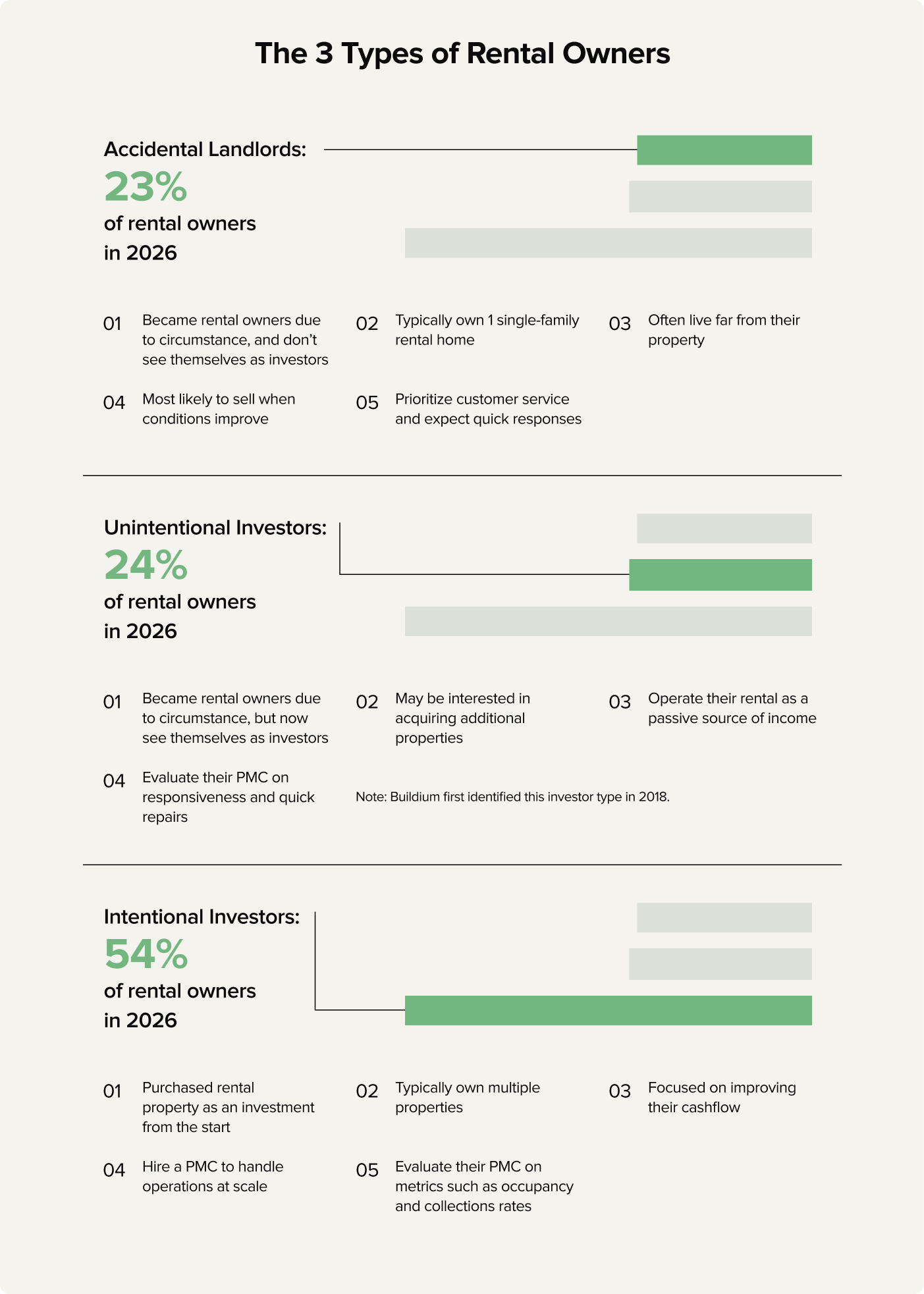
Summary: Based on Buildium’s 2026 Rental Owners’ Survey of 300 small‑portfolio U.S. rental owners, Accidental Landlords make up 23% of rental owners—a group that might look stable at first glance, but is churning beneath the surface. Many ended up renting out a single, often non‑local home because selling wasn’t an option in the current market. As a result, they care less about growth or optimization, and more about solid customer service, clear communication, quick responses, and guardrails around high‑risk decisions. Property managers who lead with stability and reassurance are better positioned to earn their trust and keep them around.
Key Insights on Accidental Landlords from Buildium’s 2026 Rental Owners’ Survey
- 23% of rental owners are Accidental Landlords, having entered rental ownership due to circumstance rather than intent.
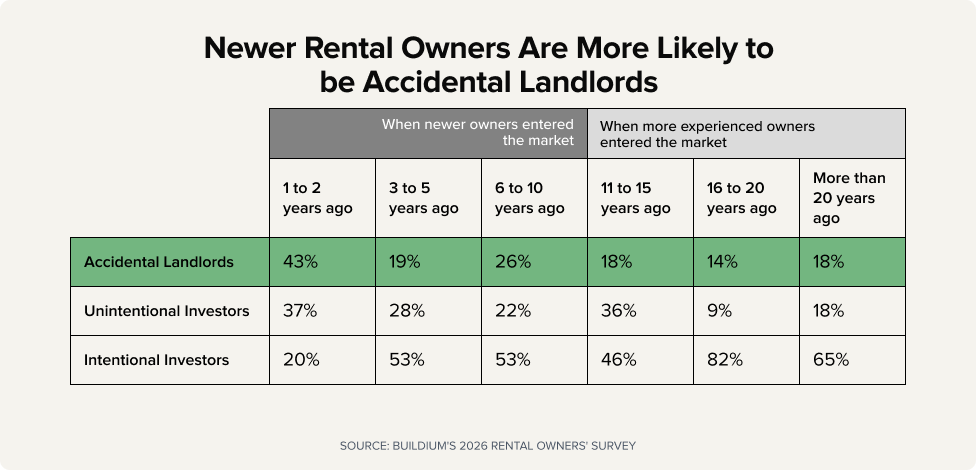
- Newer rental owners skew accidental: 43% of owners who entered the market within the last 2 years are Accidental Landlords.
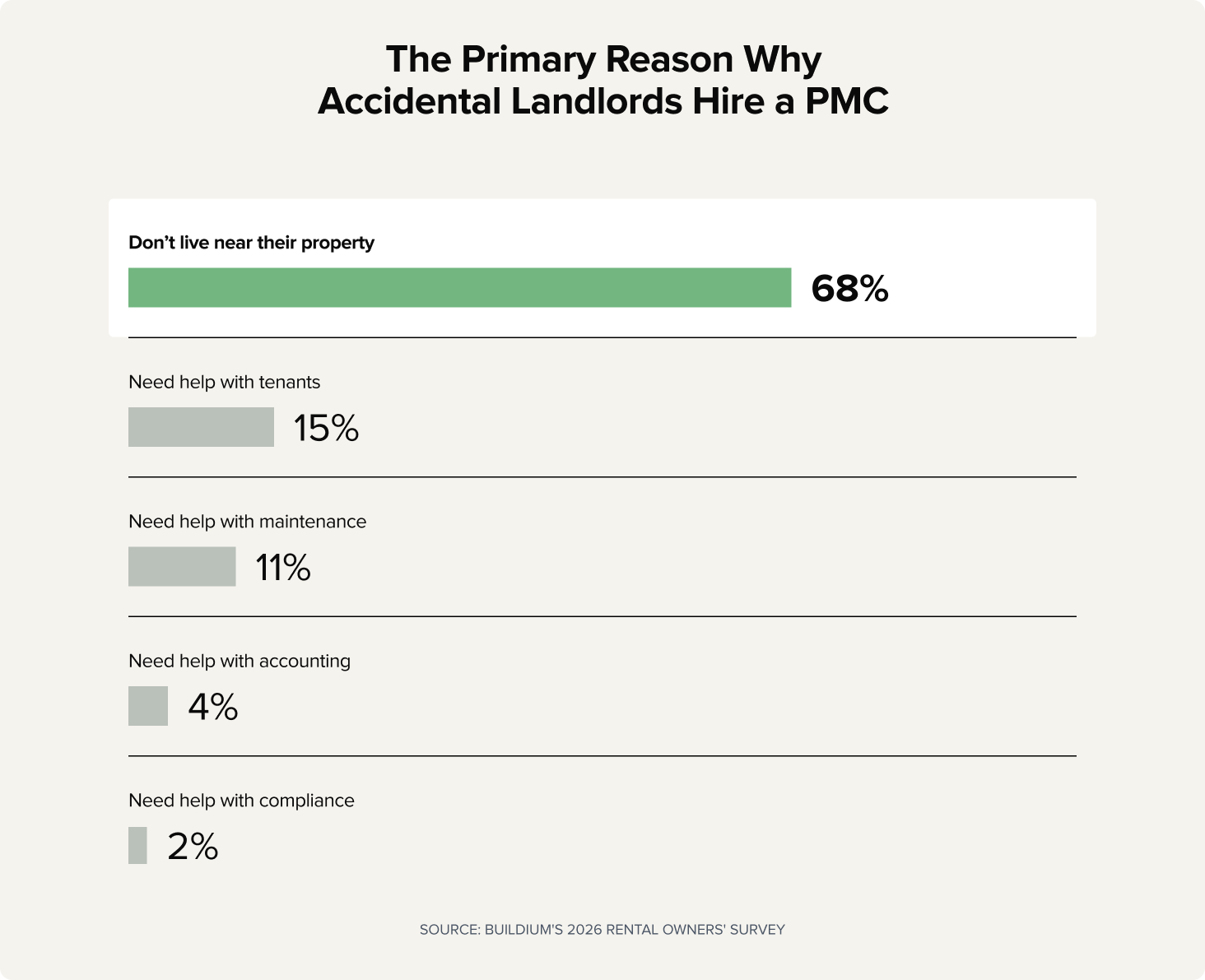
- Distance drives the PM relationship: 68% of Accidental Landlords hire a property manager because they don’t live near their property.
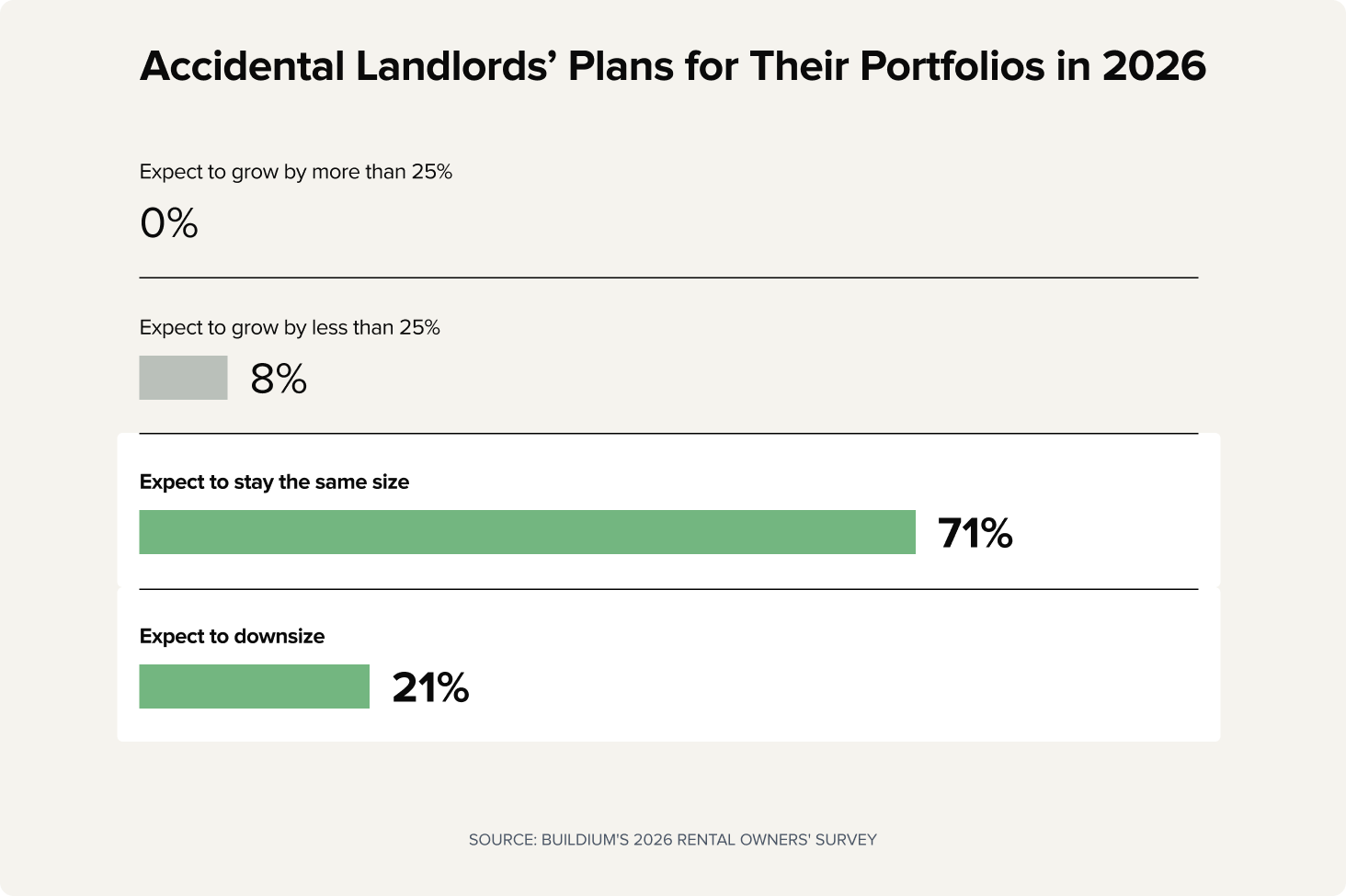
- Growth is not the goal: Only 8% of Accidental Landlords plan to acquire more properties in the next year, while 71% expect to stay their current size.
- When choosing a property management company, Accidental Landlords prioritize customer service (49%), communication/responsiveness (43%), and maintenance coordination (43%).
- Accidental Landlords prefer low‑frequency communication, but expect quick responses: 48% expect a same‑day reply, and 36% expect a response by the next business day.
- They want control at risk points: 82% want final approval on high‑cost repairs, and 62% want to approve tenants.
Accidental Landlords have made up roughly a quarter of rental property owners for the past decade. Since Buildium began tracking investor type in 2018, their share of the owner population has remained relatively stable from year to year.
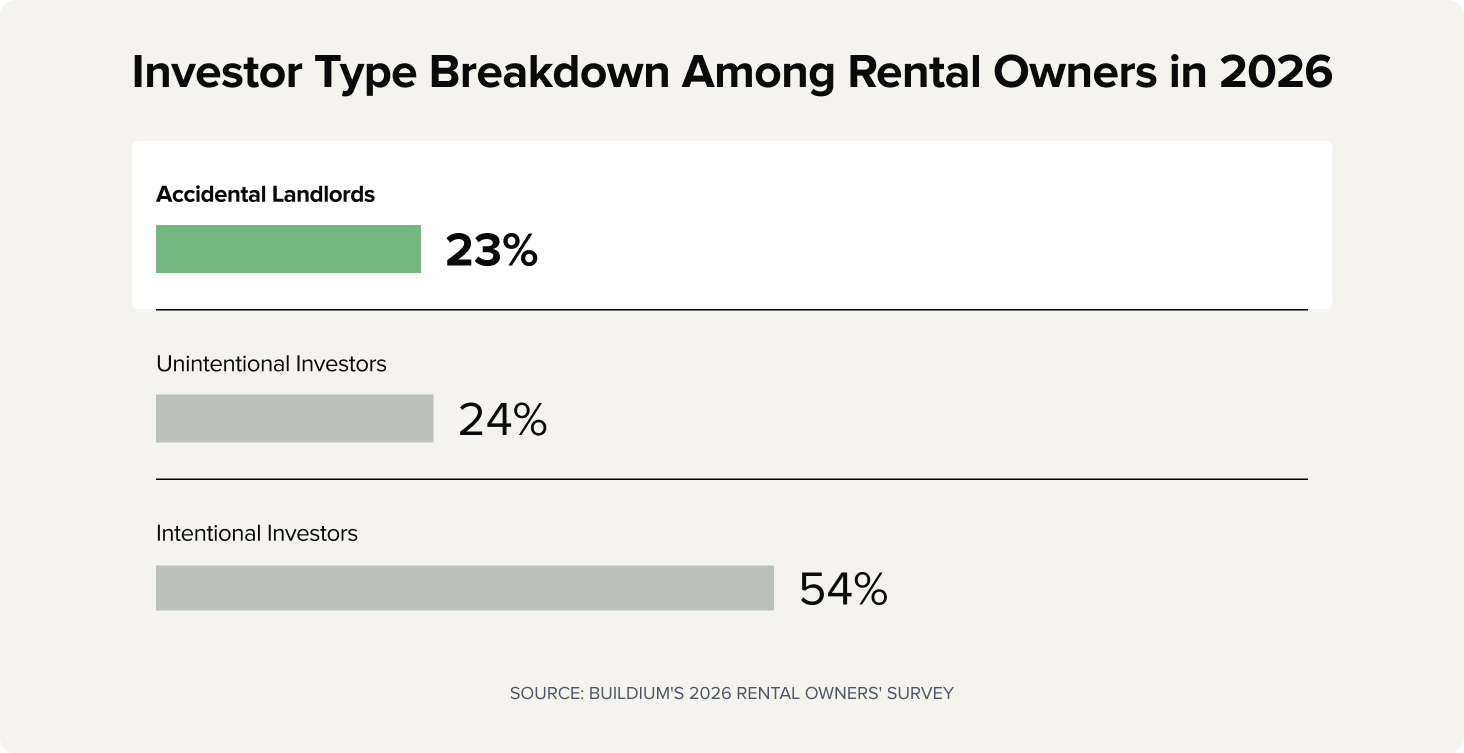
But hidden beneath the surface is steady churn. In recent years, Accidental Landlords have entered the rental market at the same time as a similar number have exited, masking the underlying change.
Today’s cooling sales market has played a major role: Many homeowners who would like to sell are instead renting out their properties. When the opportunity to sell does come up, many Accidental Landlords will take it.
Over the past two years, most new rental owners have entered the market due to circumstance rather than out of a desire to invest. The result is a growing segment of clients who view rental ownership as both temporary and risky.
In this post, we’ll take a closer look at the Accidental Landlords of 2026, and how property managers can adapt their approach to better serve and retain them.
Why is the distinction between Accidental Landlords and investors so important? The rental owners we’ll talk about aren’t looking for aggressive growth or optimization—they want stability, responsiveness, and reassurance that their property is being managed carefully.
But before we dive into the nuances of their expectations for their property manager, first, we’ll give a quick primer on the 3 different types of rental owners.
Accidental Landlords Are Delegators by Necessity, Not Investors by Identity
By definition, Accidental Landlords became rental owners because market conditions or life circumstances left them with few other options. Rather than purchasing a property with its potential to be rented out in mind, many are renting out a home that they used to live in, or that they inherited from a loved one.
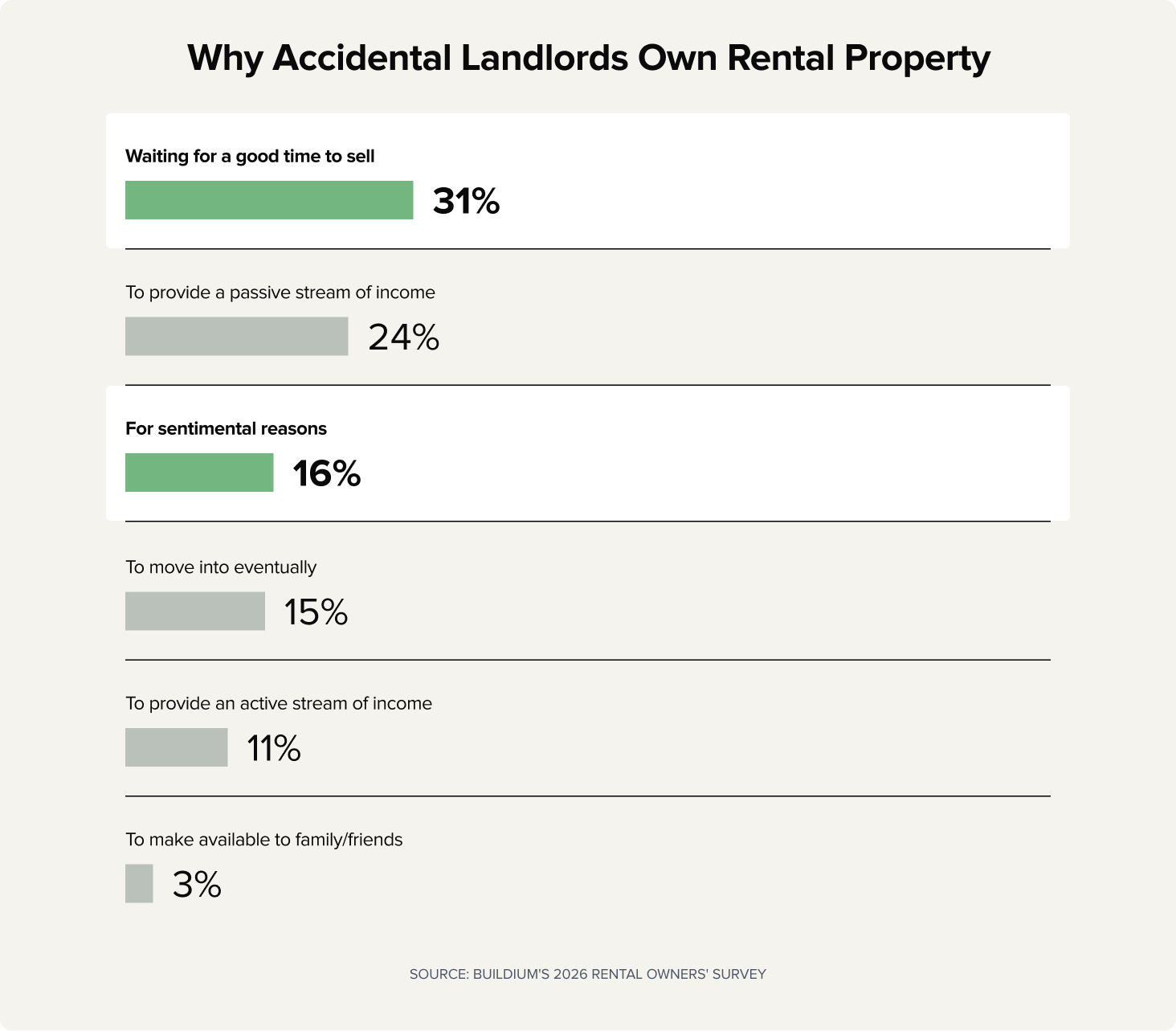
Accidental Landlords hire a property manager because managing their rental themselves simply isn’t feasible. They evaluate managers less as investment advisors, and more as trusted stewards of their property. They want to know that someone they trust is handling day-to-day operations and shielding them from stress, surprises, and mishaps.
Recommendations:
- Use the onboarding phase to build trust, defining expectations in month 1
- Anchor the relationship around stewardship and prevention of surprises
- Use plain language, avoiding investor jargon early on
Accidental Landlords Are Focused on Stability, Not Portfolio Growth
Just 8% of Accidental Landlords are interested in acquiring new properties over the next year, according to Buildium’s 2026 Rental Owners’ Survey. Most will hold onto their current property, while a meaningful share are actively looking for the right moment to sell.
This focus on stability shapes how these owners define success. Expansion and even rent growth are rarely top priorities. Instead, Accidental Landlords care about keeping the property occupied with high-quality tenants, maintaining the home’s condition, avoiding costly mistakes, and preserving their flexibility for an eventual exit.
Recommendations:
- Define success as predictability rather than growth
- Package value around asset protection and risk reduction
- Frame property improvements as protecting resale readiness
Distance is the Primary Reason Accidental Landlords Hire Property Managers
Within Buildium’s 2026 Rental Owners’ Survey, distance emerged as the most common reason why Accidental Landlords work with a property manager. Often living in a different city or state than their rental, they rely on their property manager to be their eyes and ears on the ground.
This dynamic puts a premium on visibility and trust. Accidental Landlords can’t easily check on the rental themselves, heightening their anxiety about the property’s condition and their tenants’ behavior. For Accidental Landlords, reassurance comes from knowing that nothing is being overlooked.
Recommendations:
- Provide visibility through photos and short summaries
- Make inspections routine rather than reactive
- Close loops clearly, especially following repairs
- Act as a proxy presence, not just an operator
Accidental Landlords Prioritize Customer Service & Communication
When choosing a property management company, Accidental Landlords prioritize customer service. At the end of the day, how a property manager interacts with them matters just as much as the services they provide.
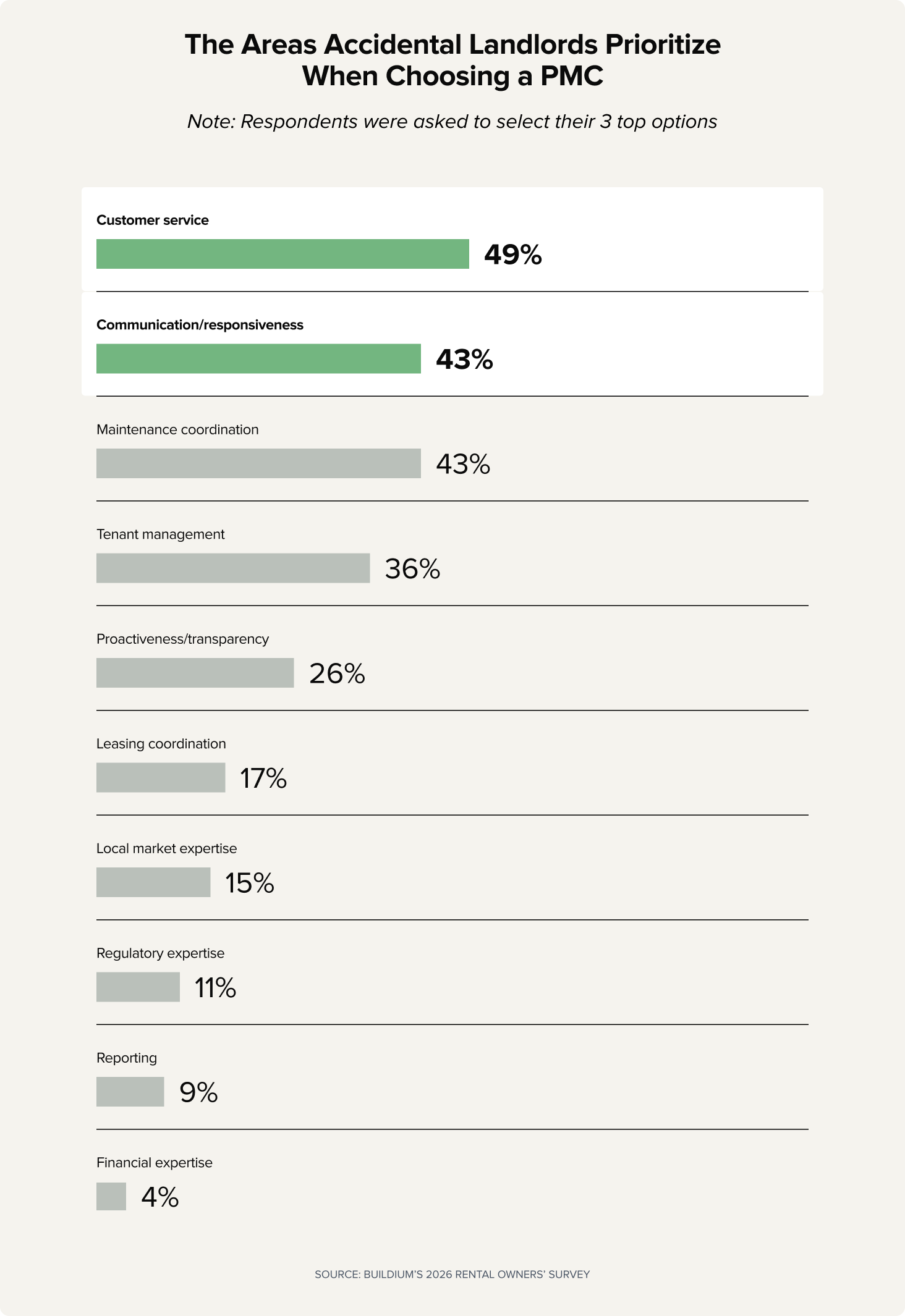
The premium that Accidental Landlords place on communication is a reflection of the ambivalence and uncertainty they feel about rental property ownership overall. Unreturned messages and vague explanations can quickly erode trust, while clear, professional, empathetic communication helps Accidental Landlords feel supported—especially when issues arise.
Recommendations:
- Explain decisions clearly and plainly
- Prevent friction from compounding, showing up stronger when stakes are higher
- Treat response time as a key metric to evaluate your team’s effectiveness
Accidental Landlords Want Fewer Updates, But Responsiveness When It Counts
Most Accidental Landlords don’t want more communication across the board. In fact, a significant share prefer to hear from their property manager only when something significant happens.

At the same time, Accidental Landlords’ high expectations for responsiveness mean that when they do reach out, or when a problem arises, they expect timely updates.
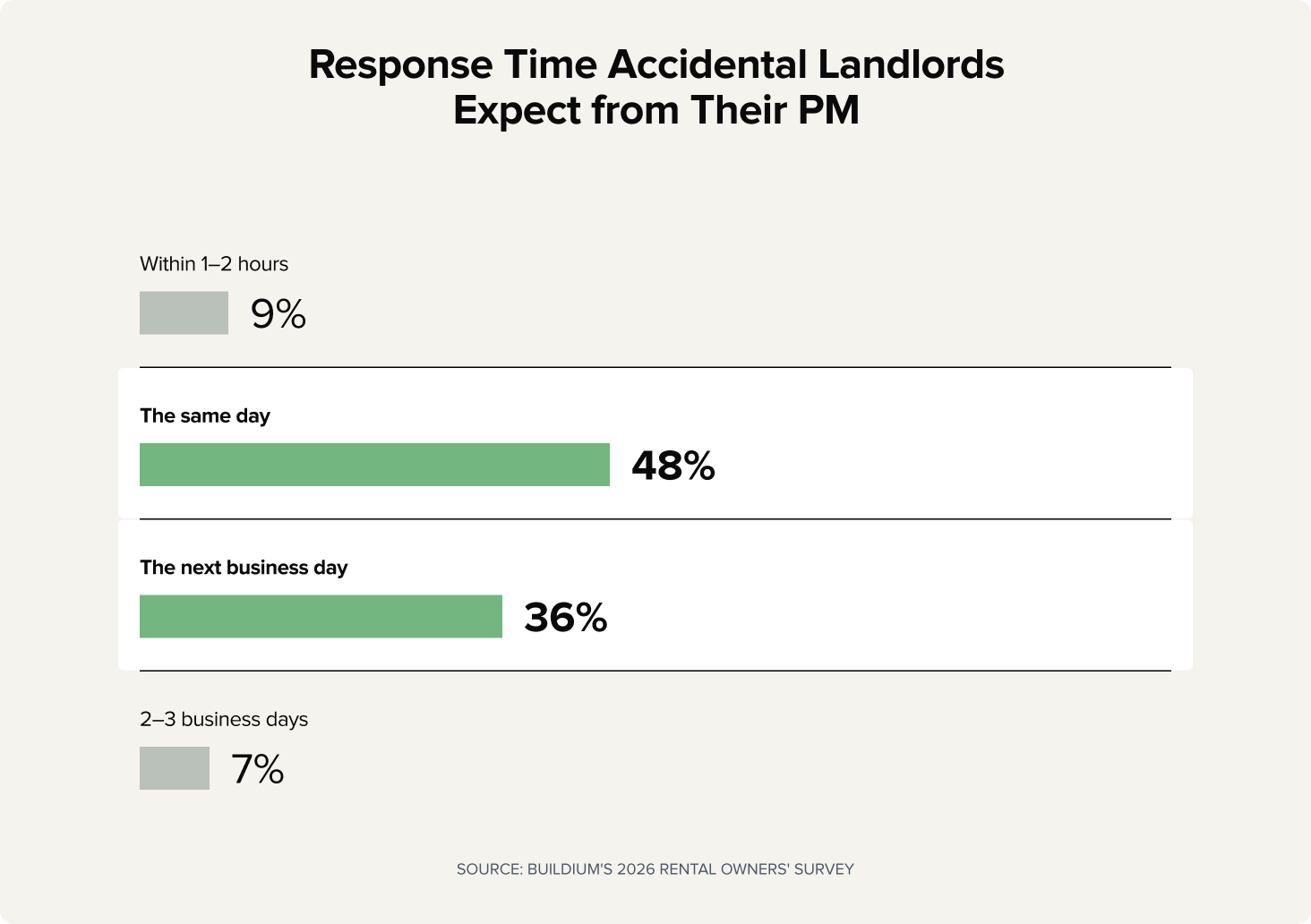
The result is a “low-noise, high-reliability” communication model that helps to reduce owners’ stress without putting them in a state of information overload.
Recommendations:
- Define what communicating “only when necessary” means upfront
- Keep routine updates predictable and minimal
- Acknowledge issues quickly, even before they’re resolved
- Always close the loop
Accidental Landlords Delegate Operations—But Want Guardrails Around Risk
Accidental Landlords are generally happy to hand off operational decisions, but they want clear boundaries in place—especially where there’s financial or legal risk. Buildium’s 2026 Rental Owners’ Survey found that most of these owners want final approval on major repairs and renovations, tenant selection, and rent changes.
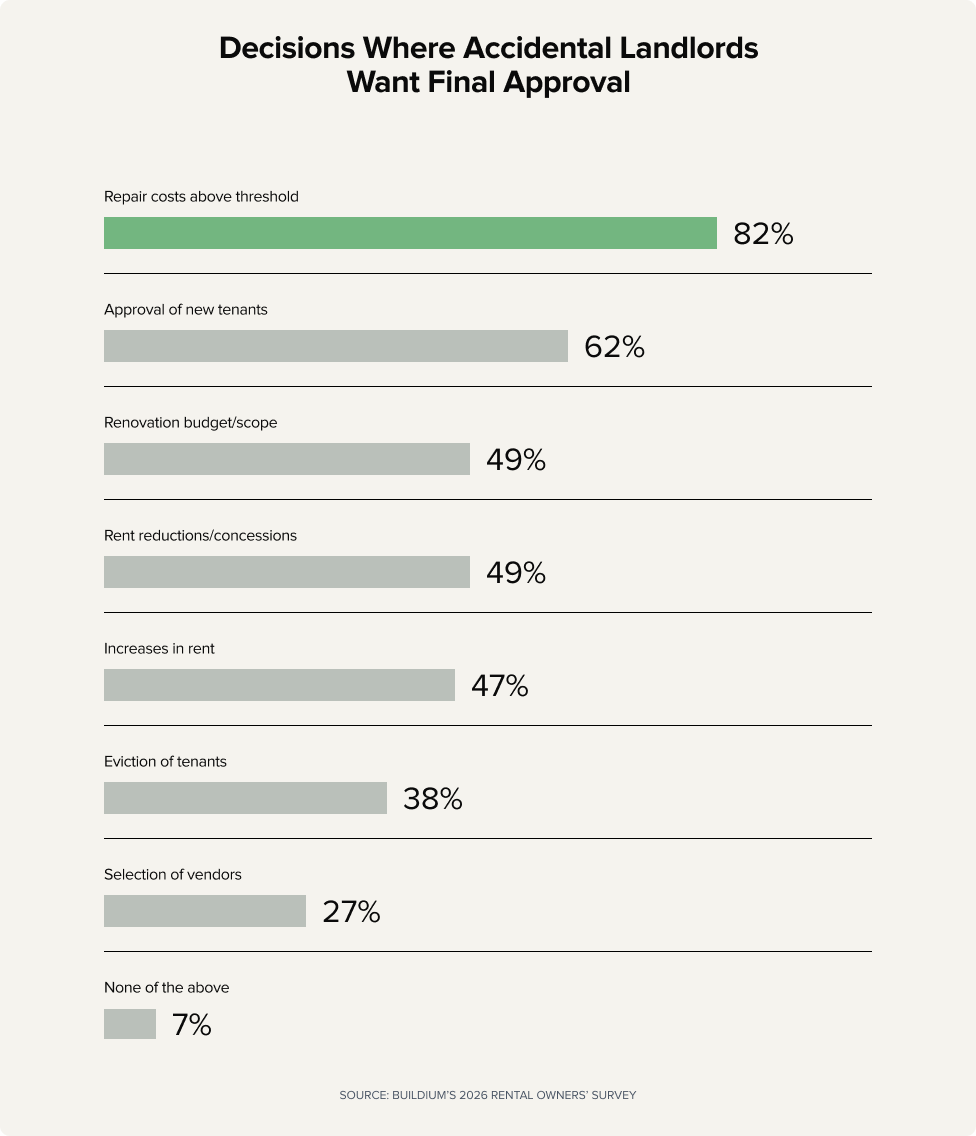
This desire for oversight reveals where Accidental Landlords feel most exposed. Because their portfolio consists of a single rental property—one they often have an emotional attachment to—a single unexpected repair or vacancy can have an outsized impact on their finances and long-term plans.
When Accidental Landlords understand where control rests (and why), they’re more likely to give property managers the autonomy they need to do their jobs without feeling the need to micromanage.
Recommendations:
- Set approval thresholds in writing, including pre-approving small items for speed’s sake
- Document decisions and outcomes
- Present options before spending any money
The Bottom Line on Working with Accidental Landlords in 2026
Accidental Landlords tend to churn when communication slips and they feel out of control at high-risk moments.
Who are the property managers that manage to retain them longest? For these owners, the most important quality you can have is reliability: your capacity to work within clear guardrails with fast responses and minimal surprises.
In a market where Accidental Landlords are constantly cycling in and out, this playbook isn’t just better service—it’s a competitive advantage.
About the Data
These findings are based on Buildium’s 2026 Rental Owners’ Survey of 300 U.S. rental property owners with small portfolios (95% of respondents own 1–20 units), fielded in February & March of 2026.
Read more on Industry Research