


Our industry is changing fast: In just one year, adoption of AI tools surged from 20% to 58% among property management professionals, signaling a major shift in how businesses are being run. But success depends on using these tools thoughtfully, especially where businesses’ reputation and relationships are on the line.
In this post, we’ll break down three tech-focused findings from our 2026 State of the Property Management Industry Report, showing how companies are using the industry’s latest innovations to cut costs, boost efficiency, and deliver better service. Want the full picture of what 2026 holds, as well as expert perspectives and practical tips to put these trends to work in your business? Download your free copy of the Industry Report now.
Trend #1: AI Goes Mainstream: Property Management’s New Power Tool
Morgan Stanley projects that AI adoption could unlock $34 billion in efficiency gains for real estate by 2030, with 37% of tasks able to be automated.
18 months ago, just 1 in 5 property management companies we surveyed were using AI. Today, it’s 3 in 5, meaning that a majority of property management professionals are now augmenting at least one business process with AI.
As one property manager told us, “AI is the next big thing in property management, and companies need to be ready to adapt to it. We plan to adopt more proptech tools in order to bring more efficiency and cut unnecessary costs.”
We’re still in the early days of AI adoption: Just 8% of survey respondents said they’d been able to fully automate any workflows. Most often, property management professionals are using AI to help them craft property descriptions and customer communications—but technological advancements (like Buildium’s latest updates) are increasingly making it possible for companies to look beyond large language models like ChatGPT and truly reinvent the way they work.
As with any new technology, the hard part is figuring out which processes can benefit from automation, and which still benefit from a human touch. One survey respondent wrote that for them, the purpose of AI tools is to streamline time-consuming business processes to “allow our in-house staff to develop deeper relations with clients and intimacy with the properties and tenants.”
Done right, AI isn’t just a trend—it’s a competitive advantage.
Turn Insight into Action: Expand AI Use Thoughtfully
- Start with Simple Wins: Use AI tools to spin up listings, draft resident and owner communications, scan bills, summarize leases, and respond to FAQs. Set review checkpoints for legal, financial, or compliance-sensitive outputs.
- Automate Revenue Tasks: Build workflows that handle management fee collection and other income streams without the need for manual follow-up.
- Stay Ahead on Renewals: Set up AI-driven reminders for time-sensitive processes, such as lease renewals and rent collection.

Trend #2: Profit Under Pressure: How PMCs Are Controlling the Costs They Can
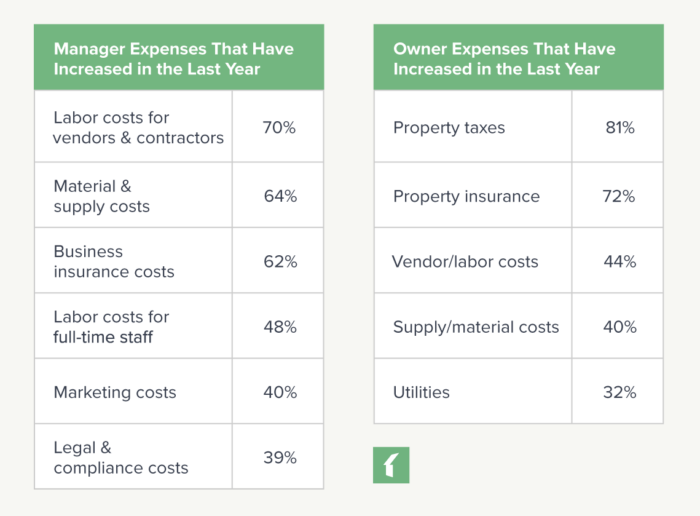
Costs continue to climb, and property management companies are feeling the squeeze. 93% reported that at least one major expense increased over the past year, according to our surveys—particularly vendors, materials, and business insurance. Owners are feeling it too, with property taxes and insurance leading the pack.
Though a majority of rental owners say their properties are in good shape financially, only 38% of owners say they’re consistently profitable. Changing this is a top priority for many in the coming year, putting additional pressure on property managers to protect their margins.
The silver lining: Although operational expenses have gone up by 39% since the start of the pandemic, the rate of increase is slowing down. All but two expenses—utilities and payroll—have moderated over the past year, according to a RealPage analysis.
To fight back against rising prices, one property manager respondent explained, “We’re focusing on proactive budget planning, renegotiating vendor contracts, and implementing preventive maintenance strategies to reduce emergency repairs. In parallel, we plan to strengthen tenant engagement by improving response times and offering self-service options—both of which can reduce overhead and improve retention. Navigating cost pressures while continuing to deliver value will be key to sustaining healthy growth and client trust.”
Turn Insight into Action:
- Renegotiate and Review: Shop around for insurance, revisit vendor contracts, and ensure they follow SOPs to avoid cost creep.
- Prevent Emergencies: Implement preventative maintenance plans to reduce high-cost, last-minute repairs and improve property performance.
Trend #3: Efficiency First: Technology Adoption as the Top Cost-Cutting Tactic
When our survey asked how property management companies plan to cut costs in the coming year, half of our respondents said the same thing: adopting new tools to improve efficiency, and better using the ones they already have. Plus, 21% told us they’ve created new revenue streams through their company’s use of technology in the past.
Property managers described expanding their use of technology to help them scale without growing their team, streamline processes to free up time for acquiring and retaining owner clients, improve collections, and minimize vacancies through better communication with residents.
In addition, one respondent told us, “We’re committed to leveraging technology like Buildium to identify cost-saving opportunities through analytics, automate time-consuming tasks, and increase staff efficiency without sacrificing service quality.”
Another respondent said, “Our greatest opportunity is leveraging technology to streamline operations and enhance tenant satisfaction. We plan to implement a system like Buildium to automate rent collection, maintenance requests, and communication. We’ll also expand into virtual leasing with 3D tours and digital applications, improve tenant self-service through portals and automated messaging, and use data to guide growth into high-demand markets. This tech-driven approach will reduce costs, boost efficiency, and strengthen client and tenant relationships.”
Turn Insight into Action:
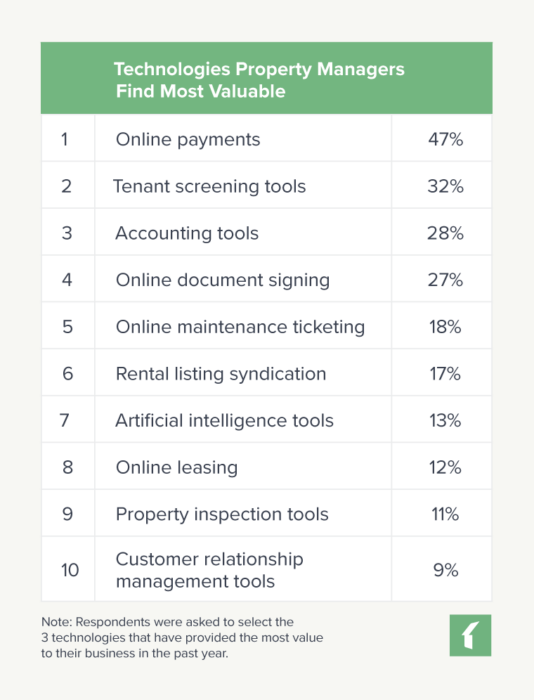
- Adopt High-ROI Technologies: Prioritize tools that cut costs or save time, such as online payments, screening, and accounting. Track impact via hours saved or reduced delinquencies.
- Maximize Existing Software: Train staff on underused tools like bulk lease renewals, late fee automation, and reporting dashboards, then audit feature adoption quarterly.
- Automate Core Processes: Use purpose-built property management software to auto-send rent reminders, route maintenance tickets to vendors, and log tenant messages, cutting manual work and delays.
Technology isn’t just part of the business—it’s the backbone of efficiency, growth, and great customer service. Advancements in AI and automation are poised to help property management companies cut costs, boost efficiency, and deliver a better experience to their residents and clients. The companies that combine tech-driven efficiency with the human touch will lead the way in 2026 and beyond.
Ready to see the full picture? Download our 2026 State of the Property Management Industry Report for deeper insights, expert perspectives, and actionable strategies.