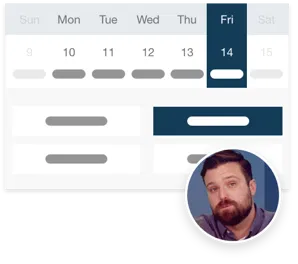

The leasing process can quickly become a bottleneck, especially when you’re managing multiple vacancies. You have inquiries coming from all directions, tours to schedule, and applications to review. It is easy for good prospects to get lost in the shuffle. This is where leasing AI helps by handling the repetitive parts of the workflow, allowing your team to focus on connecting with the best applicants.
Start your free trial today!
Try Buildium for free for 14 days. No credit card needed.
Start Your TrialThis post breaks down eight specific ways artificial intelligence is changing property management leasing workflows. You’ll walk away with a clear picture of how these tools work and where they can have the biggest impact on your business.
What We’ll Cover:
- How AI captures and qualifies leads, personalizes follow-ups, and optimizes tour scheduling to reduce no-shows
- Ways AI detects application errors, fraud patterns, and document delays before they slow down your leasing process
- Where AI adds value versus where human judgment remains essential for compliance and relationship-building
- Practical implementation steps and KPIs to measure AI’s impact on your leasing workflows
Deeper Dive: Download our Leasing Workflow Playbook for an in-depth walkthrough of how to use AI at each stage of your lead-to-lease funnel.
What Is Leasing AI Software?
Leasing AI refers to property management software that uses artificial intelligence—specifically machine learning, natural language processing, and predictive analytics—to handle repetitive leasing tasks such as lead response, tour scheduling, application processing, and tenant communication.
Unlike basic automation that follows preset rules, leasing AI learns from patterns in your data. It adapts its responses based on context and surfaces information that humans might miss. Think of traditional automation as a series of if-then statements: if a prospect submits an application, then send a confirmation email. Leasing AI goes deeper. It analyzes when prospects are most likely to open emails, what subject lines get the best response rates, and which follow-up sequences convert browsers into tenants.
It’s important to remember that AI assists rather than replaces human judgment, especially for compliance-sensitive decisions. While AI can flag risk indicators or score applications based on patterns, property managers make the final calls on tenant selection, lease terms, and exception handling.
For example, Buildium’s Lumina AI includes an AI Leasing Agent to streamline lead-to-lease workflows, Write with AI to generate polished drafts in seconds, and AI Summarization to speed up review of tasks and communications.
With definitions out of the way, let’s look at eight areas where AI is already supporting leasing workflows.
#1. Capturing and Qualifying Leads
Lead capture and qualification often represents the biggest opportunity for immediate impact. AI can respond to inquiries instantly across email, text, and web chat using natural language processing to understand intent. Rather than sending generic responses, AI asks contextual pre-qualification questions to filter serious prospects from casual browsers.
What sets AI apart from basic chatbots is its ability to learn which questions convert best and adapt its approach over time. If AI notices that prospects who mention pets early in the conversation are more likely to schedule tours, it might adjust its question sequence to address pet policies sooner. Rule-based automation can’t make these adjustments.
What It Does
Intelligent multi-channel response: AI interprets prospect questions using natural language processing and replies conversationally from listing sites, your website, and social media within seconds, day or night. Instead of generic auto-replies, prospects receive contextual answers that actually address their specific questions.
Adaptive pre-qualification screening: AI asks about move-in date, income range, pet ownership, and other criteria you set, then adjusts follow-up questions based on responses before routing qualified leads to your team. The qualification process feels natural rather than such as filling out a rigid form.
Predictive lead scoring: AI analyzes behavioral signals—response speed, question types, engagement patterns—to rank prospects by readiness so your team prioritizes high-intent leads first. You spend less time chasing tire-kickers and more time converting serious prospects.
How to Implement
Start with getting your listings to the right sites. Buildium’s intelligent rental listing syndication automatically distributes your vacancies to top rental sites like Zillow, Apartments.com, and Realtor.com, and is backed by the platform’s advanced AI and automation tools.
From there, you can layer in AI-powered lead response capabilities. Look for tools that offer adaptive pre-qualification screening and predictive lead scoring. These features can learn from your portfolio’s conversion patterns rather than just following static rules. The combination of wide listing distribution and intelligent response creates a lead capture system that works around the clock while continuously improving its ability to identify your best prospects.
Time to Value
Teams often see materially faster lead response after enabling an AI leasing responder, which can reply within seconds, especially outside business hours. AI-driven lead scoring may improve after an initial learning period as it is trained on portfolio interactions (touring, applying, signing).
KPIs to Watch
Track these metrics to measure AI’s impact on lead capture:
- Lead response time: Target under five minutes
- Lead-to-tour conversion rate: Percentage of inquiries that book a showing
- Lead score accuracy: How often high-scored leads convert versus low-scored leads
- Source attribution: Which listing sites generate qualified leads
Keep in mind that lead qualification and pre-qualification practices may be subject to legal requirements. Since laws can vary by state and locality, it’s a good idea to talk with a qualified legal professional if you’re in doubt.
#2. Personalizing Follow-Ups and Prospect Nurtures
After capturing and qualifying those leads, the next challenge is keeping them engaged. Leads often go cold because staff forget to follow up or get buried in other tasks. You might have great intentions to check in with every prospect, but unexpected daily tasks can quickly take priority.
AI uses machine learning to determine the best time, channel, and message for each prospect based on their behavior, then adapts follow-up sequences in real time as engagement changes.
What It Does
Adaptive drip sequences: AI analyzes open rates, reply patterns, and engagement timing to adjust when and how it sends property details, neighborhood info, and next-step prompts. If a prospect consistently opens emails at 7 PM, AI schedules messages accordingly.
Contextual FAQ handling: AI uses natural language understanding to answer questions about parking, utilities, and lease terms in conversational language without staff involvement. Prospects get immediate answers rather than waiting for business hours.
Intelligent re-engagement: AI identifies leads showing disengagement signals and adjusts messaging tone or offer to re-capture interest. Maybe a prospect stopped opening emails after you mentioned the pet deposit—AI might follow up emphasizing the nearby dog park instead.
How to Implement
Start with the automation tools you already have, then layer in AI capabilities. Buildium’s workflow automations can trigger follow-ups based on events and activity (e.g., inquiry, application progress, scheduled showings) using real-time triggers. These workflows handle the basic sequence.
For intelligent personalization, combine Workflow Automations with Write with AI to generate on-brand email and SMS drafts in seconds, with tone and style adapted to your needs. You can also integrate with AI-powered nurture platforms through Buildium’s Marketplace that learn optimal timing and messaging from engagement patterns across your entire portfolio.
Data You Need Ready
Set up these elements before activating AI follow-up:
- Email and SMS templates for each stage of the leasing funnel
- Rules for when to escalate a lead to a human team member
- Property-specific FAQs
- Historical engagement data (open rates, reply rates by time of day) to train AI timing models
KPIs to Watch
Monitor these metrics to track nurturing effectiveness:
- Follow-up completion rate: Percentage of leads receiving all scheduled touches
- Email/SMS open and reply rates
- Engagement score trends: How prospect interest changes over the nurture sequence
- Days from first inquiry to tour booking
#3. Predicting Optimal Tour Times and Cutting No-Shows
Building on personalized follow-ups, the next step in the leasing process is scheduling tours. Back-and-forth scheduling wastes hours and frustrates prospects. You suggest Tuesday at 2 PM, they counter with Thursday at 5 PM, you’re booked then, and by the time you find a mutual time, they’ve toured somewhere else.
AI can analyze historical booking and attendance patterns to recommend time slots most likely to result in completed tours, then uses predictive signals to identify high-risk no-shows and intervene proactively.
What It Does
Intelligent self-service booking: AI suggests tour times based on prospect behavior patterns and property-specific attendance data, syncing automatically with your calendar. Rather than showing every available slot, AI highlights times when similar prospects have actually shown up.
Predictive no-show prevention: AI identifies booking patterns associated with no-shows (last-minute bookings, low engagement) and sends targeted confirmations or offers alternative formats such as virtual tours. A prospect who books five minutes before might get an immediate text confirmation plus a backup virtual tour link.
Smart rescheduling: AI learns which prospects are likely to reschedule and proactively offers flexible alternatives before cancellation. Instead of losing the lead entirely, you keep them engaged with options.
How to Implement
Tour scheduling requires both automation and intelligence. Buildium’s Showings Coordinator, powered by Tenant Turner, handles the basics—self-service tour scheduling with pre-qualification questions and automated follow-up. Prospects book directly from your listings without phone tag.
For advanced AI capabilities you can even use tools such as Haven.ai, which engages prospects directly, coordinates viewings, and nurtures leads up to the point of signing a lease.
KPIs to Watch
Track these metrics to measure scheduling efficiency:
- No-show rate: Percentage of booked tours where the prospect doesn’t appear
- No-show prediction accuracy: How often AI correctly identifies high-risk bookings
- Tours scheduled per week
- Time spent on scheduling tasks
#4. Detecting Application Errors and Inconsistencies
After prospects tour and decide to apply, the application process itself can create bottlenecks. Incomplete applications and manual data entry slow down leasing. Half-finished applications sit in limbo while you chase missing pay stubs.
AI uses pattern recognition and data validation to guide applicants through required fields, flag missing documents, detect inconsistencies across application sections, and route completed applications for review with risk signals highlighted.
What It Does
Intelligent application guidance: AI analyzes partial submissions in real time and prompts applicants with contextual help to complete missing sections and upload required documents. Rather than generic error messages, applicants get specific guidance based on what they’ve already entered.
Anomaly detection: AI flags inconsistencies such as mismatched names, income figures that don’t align with employment type, or missing income verification using pattern recognition. You catch issues before they delay the process.
Predictive status updates: AI estimates application completion time based on current progress and notifies applicants and staff when applications move to the next stage. Everyone knows what to expect and when.
How to Implement
Start with a solid foundation for online applications. Buildium’s online rental applications let prospects apply directly from listings, pay fees, and initiate screening from a single portal. Everything stays connected rather than jumping between systems.
For advanced AI-powered error detection and anomaly flagging, integrate your application management software with specialized document scanning tools that use machine learning to analyze submissions for completeness and surface inconsistencies for your team’s review. These tools learn what complete applications look like for your portfolio and flag outliers.
KPIs to Watch
Monitor these metrics to track application efficiency:
- Application completion rate: Percentage of started applications that are fully submitted
- Error detection rate: Inconsistencies flagged by AI that require follow-up
- Average time from application start to submission
- Staff hours spent on data entry and verification
#5. Detecting Fraud Patterns and Leasing Risks
Once applications are complete, tenant screening becomes important. Fraudulent applications are increasing, and manual review can miss red flags. A doctored pay stub might look legitimate to the human eye.
AI uses machine learning to cross-reference applicant data across multiple sources, detect document manipulation, verify identity, and surface subtle inconsistencies that indicate fraud risk for human review.
That human review stage is important. Never rely solely on a screening tool—no matter how advanced—to make a decision about an application. Doing so may run the risk of introducing bias and discrimination to your review process.
What It Does
Document authenticity verification: AI analyzes ID documents, pay stubs, and bank statements for signs of tampering or forgery using image recognition and metadata analysis. Edited PDFs leave digital fingerprints that AI can detect.
Cross-source data validation: AI compares income, employment, and rental history across application fields, screening reports, and third-party databases to identify discrepancies. An applicant claiming five years at their current job might have a LinkedIn showing they started six months ago, demonstrating why you need a robust application verification process.
Behavioral fraud signals: AI detects patterns associated with fraud, such as multiple applications from the same device or IP address, unusual application timing, or copy-pasted information. These patterns often indicate organized fraud attempts.
How to Implement
Begin with reliable screening data. Buildium’s tenant screening is backed by TransUnion, a well-established credit reporting agency, and provides credit, criminal, and eviction data from trusted sources. Having this accurate baseline data makes AI fraud detection more effective.
From there you can introduce AI-powered fraud detection tools—including document authenticity verification, cross-source validation, rental history and behavioral pattern analysis.
For example, Buildium’s AI Leasing Agent can summarize an applicant’s rental history for you. You can also integrate Buildium with Celeri, a partner solution that can scan documents and detect potential fraud in seconds.
The final review and decision should always made by your team. AI surfaces risk signals and fraud indicators, but humans make final screening decisions to maintain Fair Housing compliance.
Keep in mind that tenant screening criteria, required notices, and decision processes can be subject to federal, state, and local legal requirements, so it’s always a good idea to consult with a qualified legal professional if you’re in doubt.
Data You Need Ready
Prepare these items for AI fraud detection:
- Screening criteria per property (credit score minimums, income-to-rent ratios)
- Consent forms and adverse action notice templates
- Process for human review of flagged applications
- Historical fraud cases to train detection models (optional but improves accuracy)
KPIs to Watch
Track these metrics to measure fraud detection effectiveness:
- Fraud detection rate: Applications flagged for inconsistencies or manipulation
- False positive rate: Legitimate applications incorrectly flagged as risky
- Screening turnaround time
- Acceptance-to-move-in rate: Percentage of approved applicants who sign leases
#6. Predicting Document Delays and Automating Reminders
With screening complete and applicants approved, document collection can still delay move-ins. Leasing involves collecting multiple documents from applicants (rental agreements, pet addenda, proof of insurance) and missing paperwork pushes back move-in dates.
AI predicts which applicants are likely to miss deadlines based on engagement patterns, prioritizes high-risk cases for proactive outreach, and personalizes reminder timing and tone to improve response rates.
What It Does
Predictive delay alerts: AI analyzes applicant responsiveness and document submission patterns to flag cases at risk of missing deadlines before problems arise. An applicant who took three days to respond to the last request might need earlier reminders.
Personalized reminder timing: AI learns when each applicant is most likely to respond and schedules reminders accordingly, adjusting tone based on urgency. Morning people get morning reminders. Night owls get evening nudges.
Intelligent checklist tracking: AI marks items complete as they’re uploaded, identifies document quality issues (blurry images, wrong file types), and shows progress to staff with risk indicators. You see at a glance who needs attention.
How to Implement
Start with organized document storage. Buildium’s document storage lets you upload an unlimited number of leases and related documents and share them as needed. Everything stays in one place rather than scattered across email attachments.
For advanced AI capabilities such as predictive delay alerts and personalized reminder timing based on applicant behavior patterns, integrate with AI-powered tools that track required items and predict completion likelihood. These tools learn from thousands of lease cycles to identify delay patterns.
Data You Need Ready
Organize these elements for AI document tracking:
- Document checklist per property type (rental agreements, pet addenda, proof of insurance)
- Reminder cadence baseline (how often to nudge for missing items)
- Folder structure for organized storage
- Historical document submission data to train prediction models
KPIs to Watch
Monitor these metrics to track document collection efficiency:
- Document completion rate at lease signing
- Delay prediction accuracy: How often AI correctly identifies at-risk applicants
- Average days to collect all required documents
- Staff time spent chasing paperwork
#7. Generating Lease Documents and Detecting Errors
With all documents collected, generating error-free leases quickly keeps the process moving. Manually filling lease templates and chasing signatures delays move-ins. One typo in the rent amount creates confusion and erodes trust.
AI auto-fills tenant and property data into templates, validates information for accuracy and consistency, detects common errors before sending, and uses predictive analytics to optimize signature completion timing.
What It Does
Intelligent template auto-fill: AI populates lease documents with applicant and property details from your system, then validates data against application records to catch mismatches. Names, addresses, and amounts stay consistent across all documents.
Error detection before sending: AI flags common mistakes such as incorrect dates, missing addenda, or inconsistent rent amounts before documents reach signers. You fix errors before they cause delays.
Optimized signer sequencing: AI analyzes historical signing patterns to determine the best order and timing for sending to co-signers, guarantors, and property managers. Some people sign faster when they see others have already signed.
Predictive reminder timing: AI learns when each signer type is most likely to complete their portion and schedules nudges accordingly. Property managers might sign immediately while guarantors need weekend reminders.
How to Implement
Begin with reusable templates and e-signature capability. Buildium’s eSignature feature connects with Dropbox Sign and supports reusable templates with 50+ autofill fields for faster completion. All you have to do is set a template up once and it’s ready to use for future leases.
For advanced AI capabilities look for capabilities such as intelligent error detection, optimized signer sequencing, and predictive reminder timing based on historical signing patterns. Buildium makes it easy to integrate other software with its core platform through its open API.
KPIs to Watch
Track these metrics to measure lease generation efficiency:
- Average time from approval to executed lease
- Signature completion rate without manual follow-up
- Lease error rate: Documents returned for corrections
- Reminder effectiveness: Completion rate after AI-timed reminders versus baseline
Important note: Be sure that whatever workflows you set up comply with Fair Housing laws and any other relevant laws that apply to leasing in your area. If in doubt, run your process by a qualified legal professional.
#8. Personalizing Tenant Communication and Predicting Questions
Once leases are signed, the move-in phase presents another communication challenge. New tenants have many questions between signing and move-in. Where do I pick up keys? How do I set up utilities? What’s the wifi password?
You can use AU to draft welcome messages in your brand voice, predicts which questions each tenant is likely to ask based on their profile and property type, and proactively provides answers before they’re needed.
What It Does
Predictive welcome sequences: AI analyzes tenant profile (first-time renter, pet owner, remote worker) and property features to customize move-in instructions, portal setup links, and community guidelines. First-time renters get more detailed guidance while experienced tenants get just the essentials.
Contextual FAQ responses: AI uses natural language understanding to answer questions about parking, utilities, and maintenance procedures in conversational language that matches your tone. Responses feel personal rather than robotic.
Adaptive tone and timing: AI adjusts message formality and send times based on tenant communication preferences learned from initial interactions. Young professionals might prefer casual texts while retirees appreciate formal emails. These personalized communication preferences matter for engagement.
How to Implement
Start with a tenant communication hub. buildium’s Resident Center gives tenants a portal to view documents, submit requests, and receive announcements. Rather than scattered emails, everything lives in one place.
Pair the Resident Center with Write with AI, which uses generative AI to draft personalized, on-brand move-in emails and SMS reminders in seconds based on tenant context. You can also integrate with other AI-powered communication tools through Buildium’s Marketplace.
Data You Need Ready
Organize these elements for AI tenant communication:
- Move-in checklist and timeline per property
- Portal login instructions and support contact info
- Message templates for common move-in questions
- Tenant profile data (lease terms, property features, move-in date) to enable personalization
KPIs to Watch
Monitor these metrics to track communication effectiveness:
- Tenant satisfaction scores at move-in
- Support ticket volume during onboarding
- Question prediction accuracy: How often AI proactively addresses tenant needs
- Portal adoption rate: Percentage of new tenants who activate their account
When to Keep Humans in the Driver’s Seat
For all the ways AI can help, it’s not a replacement for your expertise, which is why it’s important to know when to rely on your own judgment.
AI handles volume, speed, and pattern recognition exceptionally well. But certain decisions require human oversight. Fair Housing compliance, complex applicant situations, and relationship-building moments are where property managers add irreplaceable value. AI should surface information, predict outcomes, and recommend actions, but final calls on screening, lease terms, and exceptions stay with your team.
- Fair Housing compliance: AI can flag risk signals and score applications, but screening decisions must be made by humans with documented reasoning to avoid discrimination claims
- Exception handling: Applicants with unique circumstances (self-employed, first-time renters, non-traditional income) need human review because AI models are trained on typical patterns
- Relationship-building moments: Personal touches during tours, negotiations, and move-in build loyalty and trust that AI-generated messages can’t replicate
- Model bias monitoring: Humans must regularly audit AI-assisted outputs for potential bias.
Common Pitfalls to Avoid When Using AI for Leasing
Understanding both AI’s capabilities and limitations helps you avoid common mistakes that undermine its benefits. Keep these pitfalls in mind as you implement leasing AI:
- Over-automating sensitive decisions: Never let AI auto-reject applicants or make screening decisions without human review and documentation
- Ignoring data quality: AI learns from your data—if your historical records contain biases or errors, AI amplifies them
- Skipping staff training: Teams need to understand what AI does, how it makes predictions, and when to override recommendations
- Setting and forgetting: Review AI performance monthly, audit recommendations for bias, and retrain models as your portfolio and market conditions change
- Confusing AI with simple automation: Rule-based workflows can’t learn or adapt—verify your tools use actual machine learning, not just if-then logic
Start Leasing Smarter with Buildium
Leasing AI helps property managers handle lead capture, follow-up, tour scheduling, applications, screening, document collection, lease signing, and tenant communication with intelligence that improves over time. Rather than replacing your expertise, AI amplifies it by handling repetitive tasks while you focus on decisions that require human judgment.
Key Takeaways:
- Start with one workflow where AI’s learning capabilities show measurable improvement, such as predictive lead scoring or fraud detection.
- Use AI to handle pattern recognition, prediction, and personalization at scale, but keep humans in control of compliance-sensitive decisions and relationship moments.
- Connect your property management software to AI-powered tools through integrations so data flows without duplicate entry and models can learn from your portfolio.
- Review AI performance monthly, audit for bias, and retrain models as your portfolio and market conditions change. AI gets smarter with feedback.
Buildium combines leasing automation with AI-powered tools such as Write with AI, an AI-powered Leasing Agent, and a marketplace of intelligent partner integrations in one platform built for property managers with growing portfolios.
Instead of piecing together disconnected tools, you can get AI capabilities integrated with your core property management workflows.
To see how these systems work together before scaling, you can schedule a guided demo of Buildium or sign up for a 14-day free trial.
Frequently Asked Questions About Leasing AI for Property Managers
What’s the Difference Between Leasing Automation and Leasing AI?
Leasing automation follows fixed rules you set (if X happens, do Y), while leasing AI uses machine learning to recognize patterns, make predictions, and improve over time based on your data—so it gets smarter as you use it.
How Do I Keep Fair Housing Compliance When Using AI for Screening?
AI should surface data, detect fraud patterns, and flag risks, but humans must make final screening decisions with documented reasoning to maintain compliance. Regularly audit AI recommendations to prevent models from perpetuating bias from historical data. Keep in mind that screening and compliance requirements can vary based on where you operate. Since laws can vary by state and locality, it’s a good idea to consult with a qualified legal professional if you’re in doubt.
What Data Should I Prepare Before Turning on Leasing AI?
Start with the basics—accurate vacancy details, pre-qualification criteria, document checklists, and message templates—then add historical data (past applications, tour attendance, engagement patterns) so AI can learn what works for your portfolio.
Which KPIs Prove Leasing AI Is Working?
Track lead response time, lead-to-tour conversion, lead score accuracy, no-show prediction accuracy, fraud detection rate, and application completion rate. Compare results after 30 and 60 days to see how AI learning improves performance.
Does Buildium Integrate with AI Leasing Tools?
Yes—Buildium’s Marketplace offers integrations with AI-powered partners for automated lead response, scheduling, and communications, plus native AI
Read more on AI and Automation