
Maintenance is more than a box to check—it’s at the heart of property management companies’ success in 2026. For rental owners, it represents their #1 source of stress year after year. For residents, it’s a make-or-break factor in their decision to renew their lease. That means property managers who deliver quick fixes and proactive upkeep aren’t just solving problems—they’re building trust, boosting retention, and creating competitive advantage.
In this post, we’ll dive into 3 trends shaping companies’ maintenance strategies this year, from preventative care to in-house teams; and we’ll show how smart investments in maintenance can result in happier owners and residents, as well as stronger margins.
Want the full picture of what this year holds, as well as expert perspectives and practical tips to put these trends to work in your business? Download your free copy of our 2026 Property Management Industry Report now.
Trend #1: Maintenance Matters Most: Relieving Rental Owners’ #1 Source of Stress
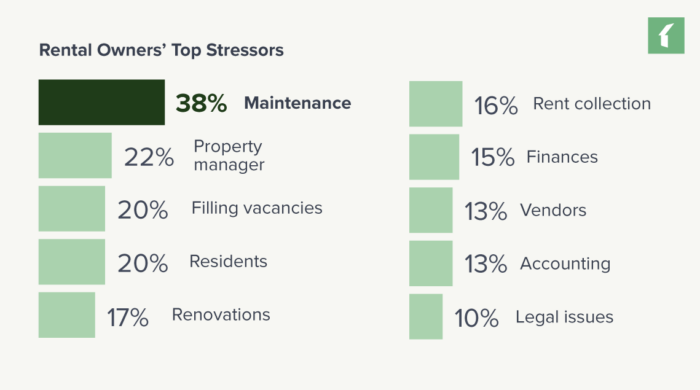
Since we started asking rental owners about their biggest sources of stress in 2017, maintenance has always been at the top of the list. (It’s not even particularly close: In our 2025 survey, 38% of rental owners said that maintenance was among their top pain points, while the next-highest stressor on the list was selected by only 22%.)
It’s no surprise, then, that more than half of rental owners say they hired a property manager to get an expert’s help with maintenance. This is your chance to shine. Property managers can show their value by reducing rental owners’ anxiety over upkeep of their properties—through both making emergency repairs, and preventing issues from happening in the first place. When it comes to preventative maintenance, the latest technology can help: One respondent mentioned that they’re “piloting IoT-based predictive maintenance to reduce repair costs and downtime.”
Another respondent summed it up this way: “The most important part of our job is to explain to the owner the importance of upkeep of their property in order to see the profitability/return. So, I think the challenge is to make sure that owners don’t defer maintenance. They ultimately will be missing the opportunity to capture the maximum rent value for their property and, over time, will put themselves in [a worse] position. That is our fiduciary responsibility.”
Turn Insight into Action:
- Launch Preventative Plans: Offer tiered packages powered by vetted vendors, using subscription pricing to boost adoption and recurring revenue.
- Use Data to Forecast Needs: Use AI and analytics to spot recurring issues and budget proactively, integrating with tools to track repair history and costs.
Trend #2: Quick Fixes, Happy Tenants: Responsiveness Drives Retention
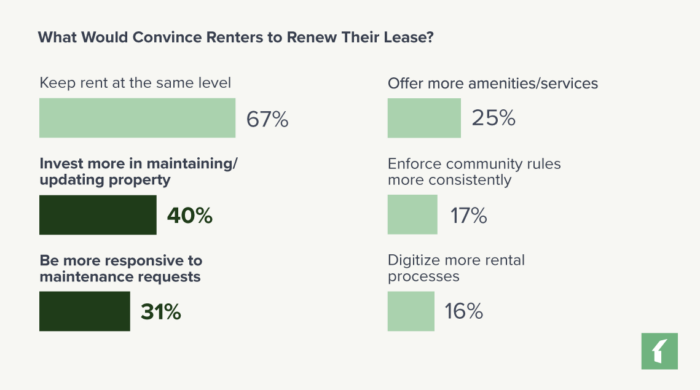
Maintenance doesn’t just impact rental owners, of course—it’s also a major factor in resident retention. When we asked renters which changes would influence their decision to renew their lease for another year, 40% said they’d stay if their property manager or landlord invested more in property upkeep, while 31% would stay if their property manager or landlord were more responsive to maintenance requests.
Overall, residents said they’d be more influenced by their property manager’s approach to maintenance than by the chance to get access to more amenities or services—making this a clear area where property managers can dig in to raise occupancy rates.
The takeaway? A two-pronged approach to maintenance wins: addressing emergency repairs and performing preventative maintenance. As one renter requested when asked how their property manager could improve the value they receive for the rent and fees they pay: “Fix maintenance problems when they are small, before they become a huge job or a safety issue.”
Turn Insight into Action:
- Accelerate Response Times: Use resident portals, mobile apps, and online ticketing (all available through Buildium’s Resident Center) to auto-route requests, send real-time updates, and track resolution times, setting SLAs to improve accountability.
- Communicate the ROI of Upkeep: Share before/after rent comps and vacancy data to prove how maintenance drives returns, justifying owners’ investment in their properties.
Trend #3: In-House or Outsourced? Rethinking the Maintenance Model
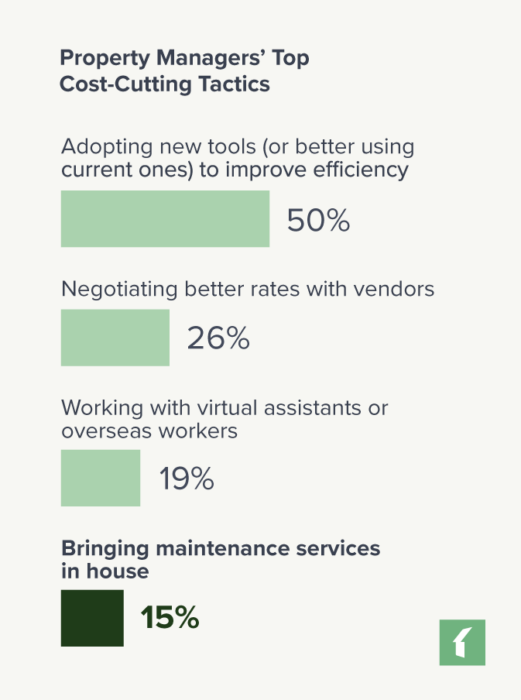
Here’s the big question: How do you deliver top-notch maintenance for your renters and owners while keeping costs tamped down? This year, some property management companies will be looking into bringing maintenance services in house, with 15% of survey respondents saying this is part of their cost-cutting plan for 2026.
It’s not easy, especially with the skilled labor shortage dragging on. Though it might be tough to recruit and retain great maintenance team members, bringing services in house can ease the challenge of finding high-quality vendors for every task that comes up. As one survey respondent told us, “We handle everything in house, and most of our properties are located within the same area. This allows for faster service, greater efficiency, and familiar staff—things our tenants truly appreciate.”
So, how do you put your plan to bring maintenance in house into action? As Kelli Segretto, Certified Property Manager at K Segretto Consulting, put it: “The first thing you want to do is look back at the last 6 months to a year: What type of work orders were you doing? Do you have a volume that could sustain an individual? What skillset does that person need to have? Are they going to be hourly or salaried? Do you want to have an in-house department, or a business that’s separate? I’m a big proponent for hybrid maintenance departments—you have an in-house team, and you have outsourced vendors for specialty services, and you leverage both.”
Turn Insight into Action:
- Start with the Data: Analyze work order volume and cost trends (for example, through Marketplace partner Property Meld) to decide which tasks might justify in-house staffing.
- Consider a Hybrid Model: Keep routine, high-frequency jobs in house for speed and consistency, while outsourcing specialized work to trusted vendors.
In 2026, maintenance is more than a service—it’s a strategy. Owners want peace of mind in knowing their properties are protected, and residents want quick fixes that preserve their quality of life in their rental. Property managers who take a proactive approach, combining preventative maintenance with responsive repairs, will stand out in a crowded marketplace.
Want to see the full data behind these trends and learn how leading property management companies are turning maintenance into a growth engine? Download our 2026 State of the Property Management Industry Report.